

Table of Contents
- Why Baked-On Grease Matters: Safety and Performance
- Essential Tools and Supplies for Removing Baked-On Grill Grease
- How to Deep Clean a Gas Grill: Step-by-Step Process
- Best Grill Cleaning Tools for Stubborn Grease
- Bristle vs. Bristle-Free Grill Brushes: Which Works Better
- Dealing with Stubborn, Baked-On Grease: Troubleshooting
- Preventative Maintenance: Keeping Grease from Building Up
- Frequently Asked Questions
Last Updated: October 4, 2026
Why Baked-On Grease Matters: Safety and Performance
Baked-on grill grease builds up fast. Heat fuses residue to your grates, creating a carbonized layer that affects grill performance and food quality.
Old grease traps heat unevenly, creating hot spots and cold zones.
Learning how to remove baked-on grill grease is straightforward with the right tools and technique, no harsh chemicals or hours of scrubbing required.
Essential Tools and Supplies for Removing Baked-On Grill Grease
The right equipment matters, and tools must match your grate material. Using the wrong tool causes permanent damage, scratches, coating loss, or rust.
Understanding Your Grate Material First
Before you buy or use any tool, identify what your grates are made of. This determines everything:
Cast iron grates: Durable and forgiving. Wire brushes and putty knives work well. Avoid prolonged soaking, which promotes rust. Dry immediately after cleaning.
Stainless steel grates: Resistant to rust but prone to scratching. Use softer brushes or bristle-free scrubbers. Steam cleaning is ideal because it requires minimal physical scraping.
Porcelain-coated grates: The most fragile option. The ceramic coating chips easily if struck hard or scraped aggressively. Never use wire brushes or metal scrapers. Bristle-free scrubbers and soft brushes only. Steam cleaning is safest because heat does the work instead of force.
Steam-Powered Cleaning Tools
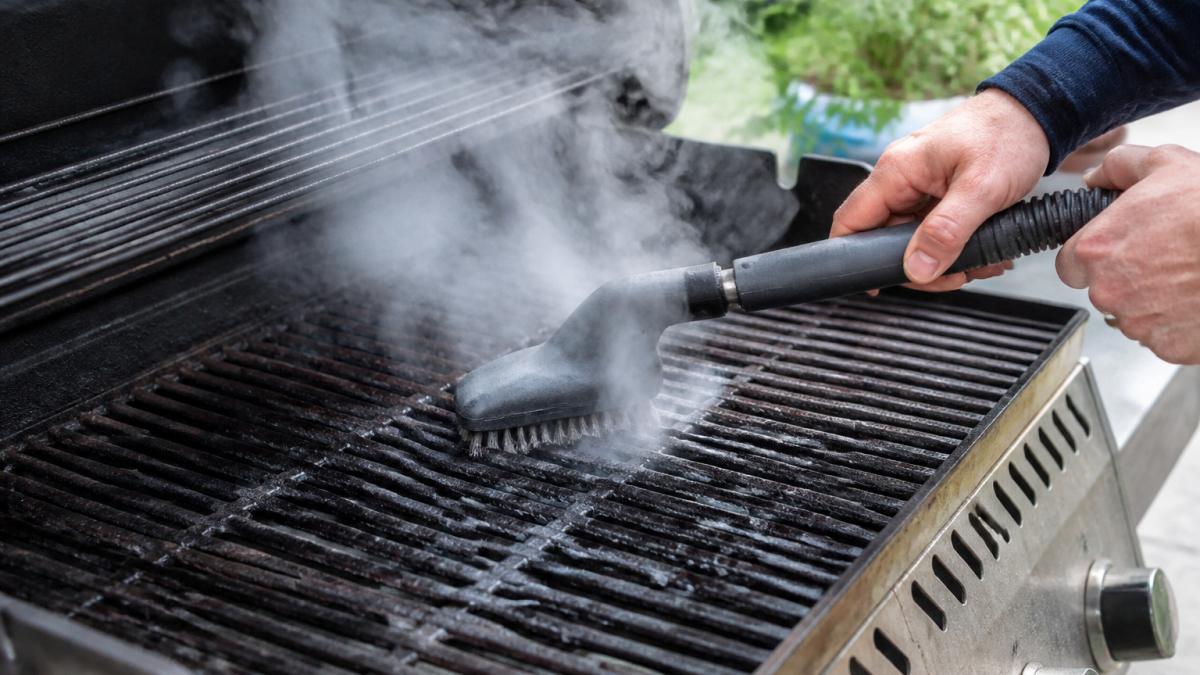
Steam melts grease on contact. Heat breaks down the chemical bonds that hold residue to your grates.
The NSF certification for potable water safety ensures steam tools meet safety standards.
Steam cleaning is especially valuable for porcelain-coated grates because it eliminates the need for aggressive scraping.
For cast iron, steam accelerates the cleaning process and reduces soaking time. For stainless steel, steam prevents the scratching that wire brushes cause.
The Grill Daddy Pro (16-ounce capacity) and Original Grill Daddy work on gas, charcoal, and electric grills with adjustable steam flow and a 22-inch handle.

Manual Scraping and Brushing Tools
Sometimes you need physical force along with heat, but the tool must match your grate type.
For cast iron: A putty knife or grill scraper handles tough, baked-on spots that steam alone won't lift.
For stainless steel: Soft-bristle brushes or bristle-free scrubbers only. For heavy buildup, use steam to soften grease first, then scrape lightly.
For porcelain-coated grates: Bristle-free scrubbers are safest.
Degreasing Solutions: Natural vs. Chemical
Natural solutions (soapy water, baking soda paste, vinegar) work best for light to moderate buildup and are safer around food. Chemical cleaners tackle heavy carbonization faster but require careful rinsing. Avoid prolonged chemical soaking on cast iron, it promotes rust. Steam cleaning eliminates chemical concerns entirely, using only water and heat.
How to Deep Clean a Gas Grill: Step-by-Step Process
Deep cleaning to remove baked-on grill grease takes 30 to 60 minutes depending on carbonization severity.
Step 1: Prepare Your Grill and Remove Grates
Start with a cool grill. Remove cooking grates, flame tamers, and flavorizer bars. Inspect the interior firebox for loose debris, ash, or grease pooling and sweep out loose material.
Step 2: Soak and Degrease the Grates
Soaking softens carbonized buildup. For light buildup, soak in soapy water 30 minutes to 1 hour. For heavy buildup, use a degreasing solution for 2 to 4 hours. With a steam brush, skip soaking, heat your grill and use steam to soften residue as you clean.
Step 3: Scrape Carbonized Buildup
Use a putty knife or grill scraper at a 45-degree angle to lift loose material. For stubborn spots, apply more degreaser or steam and let sit 5 to 10 minutes. Heavy carbonization may require multiple passes, patience beats force.
Step 4: Clean the Interior Firebox
Wipe down interior walls with a damp cloth and use a grate brush for corners. For cast iron fireboxes, apply a light oil coating to prevent rust. For steel fireboxes, dry thoroughly.
Step 5: Final Rinse and Seasoning
Rinse grates thoroughly to remove all cleaner residue. Dry completely, moisture promotes rust. For cast iron, apply a thin coat of high-heat cooking oil and wipe away excess. Reinstall grates and run the grill at high heat for 15 minutes to set the seasoning.
Best Grill Cleaning Tools for Stubborn Grease
Not all grease comes off the same way. Different tools handle different challenges.
Steam Cleaning for Grease Melting
Steam is the fastest method, heat breaks down grease chemically. The Grill Daddy Pro combines steam power with adjustable flow control and SAFE BRISTLE-LOCK technology. Steam works equally well on all grate materials without causing damage.

Wire Brushes and Putty Knives for Heavy Residue
Some buildup needs physical scraping. Wire brushes reach between grate bars. Putty knives lift thick, baked-on spots.
The Grill Daddy Safety-Clean Triton brush features three wound bristles for maximum coverage. Its stainless steel construction resists rust. The stainless steel knob provides leverage for easier cleaning. Maintaining this durable material requires consistent care, and mastering the nuances of cleaning stainless steel ensures that your equipment remains both hygienic and visually pristine.
Pair a wire brush with a putty knife for best results:
- Use the brush for general cleaning
- Switch to the putty knife for thick spots
- Return to the brush for final polishing
Bristle vs. Bristle-Free Grill Brushes: Which Works Better
This choice matters more than many people realize. Both options are safe and effective, it comes down to your preference and grate type.
The Original Grill Daddy® Steam Brush →
Traditional Bristle Brushes: Pros and Cons
Pros:
- Fast cleaning on most grate types
- Good for reaching between bars
- Affordable options available
- Effective on heavy buildup
Cons:
- Bristles can shed if not locked properly
- Rust develops on steel bristles over time
- Less effective on porcelain-coated grates
- Require regular replacement
Look for brushes with locked bristles, a critical safety feature that prevents contamination.
Bristle-Free Scrubbers: Safety and Durability
Pros:
- Zero bristle shedding risk
- Work on all grate types
- Last longer than bristle brushes
- Safe for ceramic and porcelain grates
Cons:
- Slightly less aggressive on very heavy buildup
- May cost more upfront
- Fewer options available
The Grill Daddy Pro with Bristleless Scrubber uses abrasive, flame-retardant Kevlar. It resists bending and handles tough residue without shedding. Dishwasher-safe for easy cleaning.
Many grillers choose bristle-free for peace of mind. You eliminate the worry of bristles contaminating food. Combined with steam cleaning, a bristle-free scrubber handles nearly any buildup.
Dealing with Stubborn, Baked-On Grease: Troubleshooting
Sometimes grease smears instead of lifting. Sometimes heat cycling doesn't burn it off. Here's what to do.
Why Grease Smears Instead of Lifting
Smearing happens when grease is old and oxidized. It's partially solid, partially liquid. Scrubbing moves it around instead of removing it.
Solution: Use heat first. Steam or high-heat cycling softens oxidized grease. Wait 5 to 10 minutes after applying heat. Then scrape.
If smearing continues, apply a degreasing solution. Let it emulsify the grease for 15 to 20 minutes. The chemical action breaks it down. Then scrape or brush.
Heat Cycling and Burn-Off Techniques
Some grease burns off at high temperatures. This works for thin layers but not thick buildup.
Heat cycling method:
- Preheat grill to maximum temperature
- Close the lid for 15 minutes
- Open and let cool slightly
- Scrape loose residue
- Repeat if needed
This works best on cast iron grates. Porcelain-coated grates can crack from extreme temperature swings. Use moderate heat cycling on those.
For heavy buildup, combine heat cycling with steam cleaning. The two methods work together. Heat loosens the residue. Steam and scraping remove it.
Preventative Maintenance: Keeping Grease from Building Up
Maintenance between deep cleans keeps the job manageable. But true maintenance includes seasoning cast iron after cleaning, a step most people skip that leads to rust and poor performance.
After-Cleaning Seasoning: The Critical Missing Step
Deep cleaning removes grease, but it also removes the protective seasoning layer that prevents rust and improves non-stick properties.
For cast iron grates after any deep clean:
- Dry grates completely with a cloth or paper towels. Moisture is the enemy.
- While grates are still warm (not hot), apply a thin coat of high-heat cooking oil. Use a cloth or paper towel to wipe it on.
- Wipe away excess oil. A thin layer is all you need, too much oil becomes sticky and attracts dust.
- Reinstall grates and run the grill at medium-high heat for 10 to 15 minutes. This heat sets the seasoning and burns off any excess oil.
- Let the grill cool completely before your next cook.
This seasoning layer protects against rust for weeks.
For stainless steel grates: Seasoning is not necessary. Stainless steel resists rust naturally. Simply dry thoroughly and reinstall.
For porcelain-coated grates: Do not oil. The coating is self-protective. Dry thoroughly and reinstall.
Weekly and Monthly Maintenance
Clean your grates after every cooking session:
- Let the grill cool slightly
- Brush grates with a wire brush (cast iron) or steam brush (any type)
- Remove food debris and excess grease
- Wipe with a cloth
This 5-minute task prevents buildup. You'll never face the heavy carbonization that makes deep cleaning difficult.
Monthly maintenance (once per month):
- Deep clean using the step-by-step process from the earlier section
- Or use a steam brush for 10 to 15 minutes
- For cast iron: Apply seasoning oil and heat-set as described above
- For stainless steel and porcelain: Dry and inspect for damage
Seasonal Deep Maintenance
Once per season (spring, summer, fall, winter transition):
- Remove and soak grates if needed
- Clean the firebox thoroughly
- Inspect for rust, chips, or damage
- Replace any worn components
- For cast iron: Re-season after cleaning
- Check the grill's exterior for corrosion or paint damage
Why Seasoning Prevents Future Buildup
A well-seasoned cast iron grate has a smooth, non-stick surface. Food and grease don't stick as readily. Cleanup is faster. Buildup takes longer to develop. This is why cast iron grates that are regularly seasoned stay cleaner longer than neglected grates.
The Grill Daddy Pro's adjustable steam flow makes quick maintenance easy. Fill, preheat, and brush. No chemicals. No mess. No bucket of soapy water to deal with.
Frequently Asked Questions
What dissolves baked-on grill grease most effectively?
Steam is one of the most effective solutions for dissolving baked-on grill grease. When water heats on a hot grill, it transforms into steam that penetrates and emulsifies grease on contact, loosening stubborn residue without chemicals. For additional help, soapy water and boiling water can break down grease buildup. A combination of heat, moisture, and mechanical scraping removes even the heaviest carbonized deposits. Steam-powered tools deliver consistent results across all grate materials.
How does steam cleaning compare to traditional scrubbing for removing baked-on grill grease?
Steam cleaning melts grease on contact, making it easier to lift away with less physical effort than traditional wire brush scrubbing alone. Steam penetrates carbonized buildup and emulsifies grease so it wipes away cleanly, while wire brushes rely on abrasive action to scrape residue. Many grillers find steam cleaning faster and more thorough, especially for heavy grease. You can combine both methods: use steam to soften the buildup, then scrape with a putty knife or brush for maximum efficiency.
Is it safe to use chemical degreasers on grill grates?
Chemical degreasers can work on grill grates, but they require careful rinsing to avoid leaving residue that contacts food. Many grillers prefer non-toxic, chemical-free methods like steam cleaning and natural solutions (soapy water, boiling water) to eliminate safety concerns. If you do use chemical degreasers, always follow the manufacturer's instructions, rinse thoroughly with clean water, and allow the grates to dry completely before cooking. Steam and mechanical cleaning offer effective alternatives without chemical risk.
How often should I deep clean my grill to prevent baked-on grease buildup?
Deep cleaning every 3-6 months prevents heavy grease accumulation, though frequency depends on how often you grill. Regular users (weekly or more) benefit from monthly deep cleaning to maintain performance and food safety. Between deep cleans, brush grates after each use while they're still warm to remove loose debris and prevent grease from hardening. Preventative maintenance is far easier than dealing with stubborn carbonized buildup later, and it extends the life of your grill.


