

Last Updated: October 23, 2026
Quick Summary
Clean cast iron grill grates while they are still warm: scrape residue front to back with the grain, steam away baked-on buildup, then wipe dry and apply a thin coat of cooking oil. Never soak them in water, and re-season after every deep clean.
- Scrape in one direction with the grain so grease lifts off instead of being pushed into the pores.
- Wipe grates with a damp cloth, then towel dry immediately, because leftover moisture becomes rust by morning.
- Remove rust with abrasion and re-season right away; skip chemical rust removers on cooking surfaces.
- Season with a thin oil coat heated until it stops smoking, about 15 to 20 minutes.
- Use mild dish soap only for a full reset on bare or rusted metal, not routine cleaning.
Table of Contents
- Why Cast Iron Grill Grates Need a Different Cleaning Approach
- What You'll Need Before You Start
- Step-by-Step: Cleaning Cast Iron Grill Grates While They're Still Warm
- How to Remove Rust from Cast Iron Grill Grates
- How to Season Cast Iron Grill Grates After Cleaning
- The Best Grill Brush for Cast Iron Grates
- Cleaning Grill Grates with Dish Soap: When It's Safe
- Common Mistakes to Avoid
- Frequently Asked Questions
Why Cast Iron Grill Grates Need a Different Cleaning Approach
Cast iron grill grates are the cooking surface most people either love or ruin. This guide from Grill Daddy Brush Company explains how to clean them without stripping the seasoning.

Cast iron is not stainless steel. It is a porous, reactive metal protected by a thin layer of polymerized oil called seasoning, your non-stick surface, rust barrier, and flavor.
Most grill cleaning advice online was written for stainless grates. Wire brushing a cast iron grate like a stainless one is the fastest way to ruin it.
The good news: cast iron is forgiving if you respect three rules. Keep it warm, keep it dry, and keep it oiled.
What You'll Need Before You Start
Gather your tools before you touch the grill, a hot grate waits for no one, and running inside mid-clean is how people burn fingers.
- A grill brush or scraper (steam-style or bristle-free work best)
- A spray bottle of plain water or a steam brush with a reservoir
- A clean cotton towel or microfiber cloth
Skip the bucket of soapy water. Cast iron and standing water are not friends. You want controlled moisture, not a soak.

Check your grate's condition first: light residue needs a quick scrape, baked-on carbon needs steam and patience, and rust needs a separate fix covered below.
Step-by-Step: Cleaning Cast Iron Grill Grates While They're Still Warm
Cleaning cast iron grill grates while they're still warm is the single biggest time-saver in grill maintenance. Warm metal releases grease and residue far more easily than cold metal, and you finish before residue hardens into cement.
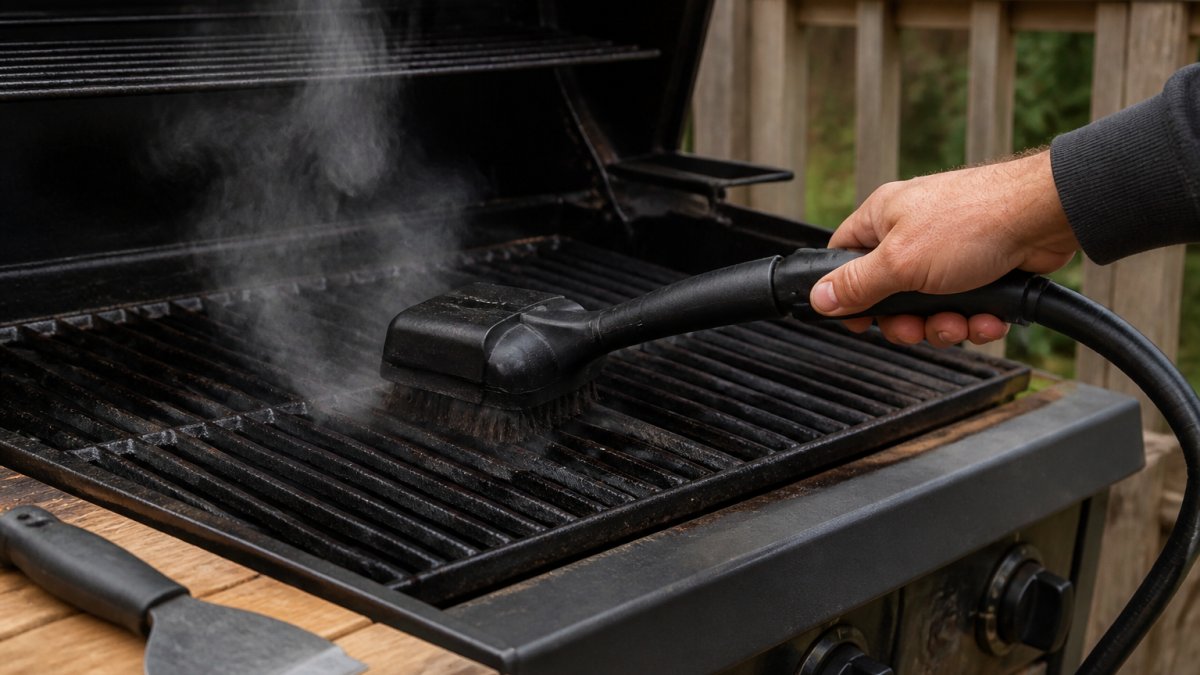
Here is the full sequence. Total time: about 10 minutes.
Scrape Off Food Residue and Grease
- Turn the burners off but leave the lid closed for two minutes. This lets the grates settle to a workable heat.
- Put on your heat-resistant gloves.
- Scrape front to back, with the grain of the grates. Short, firm strokes.
- Lift loose residue off with the scraper edge. Do not press hard enough to gouge the surface.
What most guides miss: scrape in one direction. Back-and-forth scrubbing pushes grease into the pores instead of lifting it off.
Steam Away Stubborn, Baked-On Buildup
This is where a steam brush earns its place. Fill the brush with water, open the valve, and let steam melt grease on contact and lift it out of pits a dry brush cannot reach.
Work in crosswise strokes over each grate. For heavy spots, hold the brush in place for a few seconds and let the steam soften the crust.
Rinse, Wipe, and Dry Thoroughly
Wipe the grates down with a damp cloth, then immediately follow with a dry towel. Dry thoroughly. Every bit of moisture left on cast iron becomes a rust spot by morning.
Then apply a thin coat of cooking oil while the grates are still warm. The warmth helps the oil spread and absorb.
How to Remove Rust from Cast Iron Grill Grates
Rust on cast iron grill grates is almost always surface rust, and surface rust is fixable. But light surface rust, moderate rust with flaking, and deep pitting each need a different response, and the recovery sequence matters as much as removal.
Step 1: Diagnose the Rust Before You Touch It
Wipe the grate with a dry paper towel. Look at what comes off and what stays.
- Light surface rust is orange-brown, powdery, and wipes away in patches. The metal underneath is smooth. This is a maintenance task.
- Moderate rust has flaking edges and visible texture. A fingernail catches on the surface. This is a weekend project.
- Deep pitting shows dark craters below the surface, and the metal feels rough even after scrubbing. Pitting means the seasoning barrier failed long enough for moisture to eat into the iron. Small pits can be recovered. Widespread pitting across the cooking surface is a replacement decision, because food will keep catching in the craters no matter how well you season.
Step 2: Remove the Rust with Abrasion, Not Chemicals
Skip chemical rust removers. They leave residue on a cooking surface and can etch the iron. Abrasion plus re-seasoning is the food-safe route.
- Scrub the rusted areas with a stiff brush or steel wool. Work in small circles over the rust until you reach bare, dark metal. Expect gray-black dust.
- Wipe away the dust with a dry cloth. Do not rinse yet.
- Wash the grate with hot water and a small amount of mild dish soap. This is one of the few times soap belongs on cast iron, because you are cleaning bare metal, not seasoned metal.
- Dry it completely and immediately. Towel dry, then put the grate back on a warm grill for a few minutes to drive off residual moisture. Every bit of moisture left on bare iron becomes new rust by morning.
Step 3: Re-Season Immediately
Bare metal rusts fast, so do not let the grate sit overnight before seasoning.
- Rub a thin layer of cooking oil over the entire grate, including the edges and the underside.
- Heat the grill to medium-high with the lid closed until the oil stops smoking, about 15 to 20 minutes.
- Let it cool, then repeat the oil-and-heat cycle two or three times.
- Wipe off any excess oil before the next cook.
Step 4: Prevent the Next Round
Rust comes back when moisture stays on the grate. The prevention loop is short: dry thoroughly after every wash, apply a thin oil coat while warm, and store with the lid closed but the grate dry.
Rust usually shows up after a single skipped drying step, not months of neglect. Treat drying as part of cleaning, not an optional finish.
The Original Grill Daddy® Steam Brush →
How to Season Cast Iron Grill Grates After Cleaning
Seasoning is the protective layer that keeps cast iron working. Knowing how to season cast iron grill grates properly separates a grate that lasts decades from one that rusts out in a season.
Here's the routine:
- Dry the grate completely.
- Apply a thin coat of cooking oil. Thin matters. Pools of oil turn sticky, not slick.
- Heat the grill to a medium-high setting with the lid closed.
- Let it run until the oil stops smoking, about 15 to 20 minutes.
- Cool, then wipe off any excess.
Do this after every deep clean. For routine cleaning, a single oil coat while warm is enough.
The Best Grill Brush for Cast Iron Grates
The best grill brush for cast iron grates removes residue without gouging the seasoning, a controlled scraping edge or steam-assisted head, not an aggressive rotary wire wheel. Start with what is safe on cast iron and what is not.
Tools That Are Safe on Cast Iron
- Steam brushes. A steam brush releases water vapor through the head while you scrub. The steam melts grease on contact and lifts it out of the pits a dry brush cannot reach. This is the gentlest effective option for a seasoned grate.
- Bristle brushes with locked stainless steel bristles. A stiff stainless brush with bristles anchored in the head is fine for routine scraping on cast iron. The key is a controlled stroke, not pressure.
- Bristle-free scrubbers. An abrasive aramid pad scrubs without any bristles at all. It is a preference call, not a safety one.
Tools That Damage Cast Iron
- Rotary wire wheels on a drill. Too aggressive. They cut through seasoning and leave a scratched surface that rust loves.
- Brass brushes on a seasoned grate. Brass is softer than the iron but hard enough to wear at thin seasoning over time.
- Oven cleaner and harsh degreasers. These strip seasoning and can leave residue on a cooking surface.
Bristle vs. Bristle-Free: A Choice, Not a Safety Issue
Both styles are safe and effective on cast iron. The decision comes down to how you like to work.
- Choose bristles if you want a familiar scrubbing feel and a head that reaches into grate gaps. Stainless steel bristles have been used safely for over 20 years with no incidents when the head is properly locked.
- Choose bristle-free if you prefer an abrasive pad with no bristles at all. The aramid scrubber pad is dishwasher-safe and swaps out when it wears.
We build both at Grill Daddy and recommend them for different reasons. The Original Grill Daddy® Steam Brush ($29.99) is our pick for smaller grills and steam-cleaning newcomers.
The Grill Daddy® Pro ($59.99) suits medium to large grills.

If you'd rather skip bristles entirely, the Bristleless Grill Daddy Pro with Kevlar Scrubber ($59.99) uses an abrasive aramid pad instead of bristles.
| Brush Style | Best For | Why |
|---|---|---|
| Original Steam Brush | Small grills, oven racks | Compact, steam-powered, replaceable head |
| Grill Daddy Pro | Medium to large grills | 16 oz reservoir, 22-inch handle, scraper included |
| Bristleless Pro | Anyone who prefers no bristles | Aramid scrubber pad, dishwasher-safe |
| Replacement Scrubber | Existing Pro owners | Swap the pad, keep the handle |
Cleaning Grill Grates with Dish Soap: When It's Safe
Cleaning grill grates with dish soap is safe in one situation: a full reset on bare or rusted metal. It is not safe for routine cleaning of a seasoned grate.
Dish soap strips oil. That's the point of it. On a well-seasoned grate, soap removes the very layer you spent all season building.
Use mild dish soap only when:
- You're removing rust and need to clean bare metal
- The grate has built up a sticky, uneven seasoning layer
- You're doing a once-a-season deep clean
For everyday cleaning, hot water and steam do the job. No soap needed.
Common Mistakes to Avoid
The biggest mistake is soaking cast iron in water. A quick rinse is fine. A 30-minute soak is how rust starts.
Other mistakes we see constantly:
- Brushing cold grates. Residue hardens as it cools. Clean warm.
- Skipping the oil coat. Bare cast iron rusts fast.
- Storing the grill without drying it. Moisture plus a closed lid equals rust.
Follow the warm-clean-dry-oil loop and your grates will outlast the grill.
Cast iron rewards a little discipline: clean it warm, dry it completely, oil it thin, and repeat.
At Grill Daddy, we built our steam brushes around exactly that workflow: fill with water, heat the grill, open the valve, and scrub.
Ready to make grate cleaning the easy part of your cookout? Add the Grill Daddy Pro to your cart and get a spotless, food-safe cooking surface every time.
Frequently Asked Questions
Should you clean cast iron grill grates while they are hot?
Yes, warm grates are easier to clean because heat loosens grease and food residue. Clean right after cooking, before the grates cool completely. Use a brush with a long handle to protect your hands, and avoid plunging hot grates into cold water, which can cause cracking. A steam brush works well here because it uses the grill's own heat to generate steam that lifts baked-on food.
Can you use a wire brush on cast iron grill grates?
You can use a wire brush on cast iron, but choose one with securely locked bristles. Loose bristles can end up in food, so look for a brush with a locking mechanism or a bristle-free scrubber. Grill Daddy offers both stainless steel bristle brushes with SAFE BRISTLE-LOCK technology and bristle-free Aramid scrubbers, so you can pick the style you prefer. Either option is safe and effective when used as directed.
How do you reseason cast iron grill grates after cleaning?
After cleaning and drying the grates completely, apply a thin coat of cooking oil to both sides. Heat the grill to medium-high until the oil smokes, then let the grates cool. Repeat this process two or three times for a solid protective layer. Re-seasoning after deep cleaning or rust removal restores the nonstick surface and prevents corrosion.
Can rusted cast iron be cleaned?
Yes, rusted cast iron can be restored. Scrub the rust off with a stiff brush or steel wool, then wash with mild soap and water. Dry thoroughly and apply a thin coat of oil. Bake the grates in a hot grill or oven to set the seasoning. For heavy rust, a vinegar and water soak can help loosen the corrosion before scrubbing.


