

Table of Contents
- Why Chemical-Free Grill Cleaning Matters
- Steam Grill Cleaning Benefits and How It Works
- Natural Grill Cleaning Hacks That Actually Work
- How to Clean Grill Grates with Steam: Step-by-Step Process
- Material-Specific Cleaning for Stainless Steel, Cast Iron, and Ceramic
- Preventative Maintenance to Reduce Buildup
- Common Mistakes to Avoid When Cleaning Without Chemicals
- Frequently Asked Questions
Last Updated: September 18, 2026
Why Chemical-Free Grill Cleaning Matters
When you cook on your grill, you want it clean. But harsh chemicals leave residue that can end up in your food. At Grill Daddy Brush Company, we've spent nearly two decades helping people clean grill without chemicals, avoiding toxic degreasers and wire brushes that shed bristles into meals.

The real problem isn't just cleanliness. It's safety. Traditional wire brushes lose bristles constantly (the CDC). Those bristles end up on your grates, then on your food. Chemical cleaners soak into the metal and can contaminate what you cook. Neither option is worth the risk.
There's a better way. Natural methods work just as well, sometimes better. Steam, baking soda, vinegar, and simple tools do the job without danger. The process is straightforward once you know what actually works.
Steam Grill Cleaning Benefits and How It Works
Steam is powerful because it uses heat and moisture together. When water turns to steam, it expands and penetrates every crevice on your grates. The heat loosens stubborn grease. The moisture lifts it away. No chemicals needed.
Here's what makes steam effective:
- Melts grease on contact, Heat breaks down burned-on food instantly
- Reaches tight spaces, Steam gets where brushes can't
- Sanitizes naturally, High heat kills bacteria without bleach
- Safe for all metals, Works on stainless steel, cast iron, and ceramic
- Eco-friendly, No toxic runoff into your yard or local water
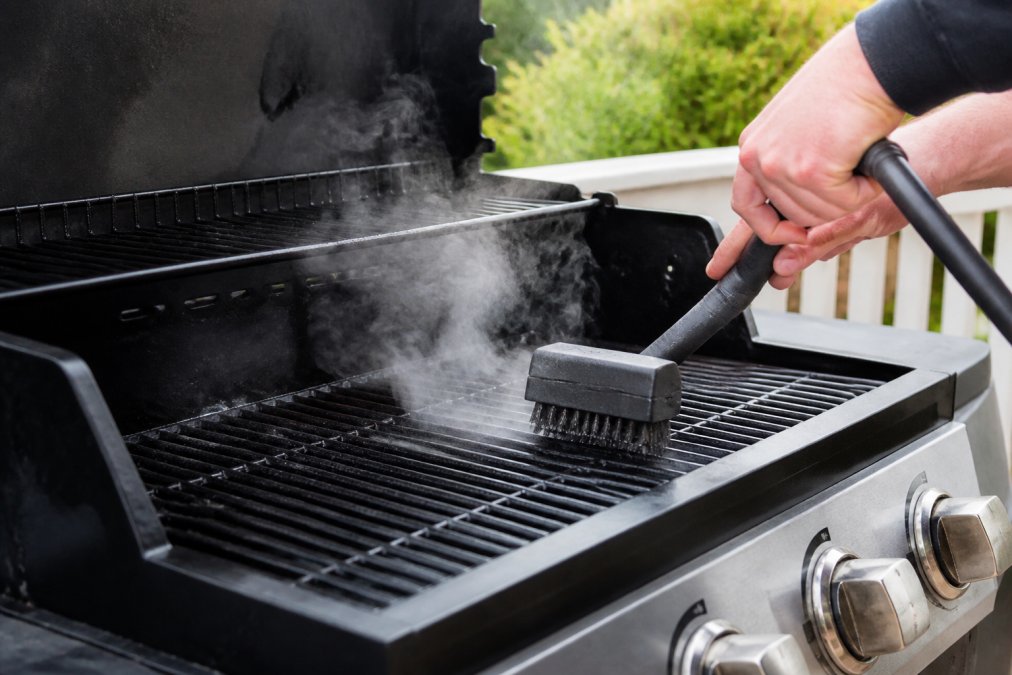
The process is simple. You preheat your grill, fill a steam brush with water, and let the heat do the work. As you brush, steam flows onto the grates. The combination of pressure and heat breaks down carbonized buildup in seconds.
Unlike scrubbing with harsh products, steam cleaning offers a way to clean grill without chemicals and is faster. You spend less time cleaning and more time grilling. The results are cleaner grates with zero chemical residue.
Natural Grill Cleaning Hacks That Actually Work
You don't need expensive products to clean your grill. Common household items work surprisingly well. These methods are safe, affordable, and effective for regular maintenance.
Baking Soda and Vinegar Method
Baking soda is mildly abrasive. Vinegar is acidic. Together, they break down grease without scratching your grates.
Here's how to use them:
- Sprinkle baking soda on damp grates
- Spray vinegar over the baking soda, it will fizz
- Let it sit for 15-20 minutes
- Scrub gently with a nylon-bristled brush
- Rinse thoroughly with clean water
- Dry completely with a cloth
This method works best on light to moderate buildup. For heavy carbonization, repeat the process or combine it with another method.
Aluminum Foil Ball Scrubbing
Aluminum foil is abrasive enough to remove stuck-on food but won't damage your grates. This method is free if you have foil at home.
The process is straightforward:
- Crumple aluminum foil into a tight ball (shiny side out)
- Preheat your grill to medium-high heat
- Scrub the grates in a crosswise motion with the foil ball
- Work methodically across the entire surface
- Wipe clean with a damp cloth
The heat softens the grease, making it easier to remove. The foil provides just enough texture to lift residue without gouging the metal. This method is quick, usually five to ten minutes total.
Grill Brick for Flat Top Surfaces
Flat-top grills need a different approach. Grill bricks are specially designed for these surfaces. They're made from a porous material that scrubs without scratching.
Using a grill brick correctly:
- Preheat the grill to medium heat
- Add a small amount of water to the surface
- Scrub with the brick using firm, even pressure
- Work in sections across the entire cooking surface
- Wipe away debris with a cloth
- Repeat if needed for stubborn spots
Grill bricks work through friction rather than chemicals. They're gentle on seasoned surfaces but effective on carbonized buildup. Many professional cooks use them exclusively for flat-top maintenance.
How to Clean Grill Grates with Steam: Step-by-Step Process
Steam cleaning is the most efficient method for regular grate maintenance. It combines safety with speed. The process takes less than fifteen minutes from start to finish.
Preparation and Safety Precautions
Before you start, take basic safety steps. These prevent burns and ensure the best results.
Safety steps to follow:
- Wear heat-resistant gloves, Steam is hot and can burn skin
- Keep children and pets away, The grill will be extremely hot
- Never point the steam brush at people, Misdirected steam causes injuries
- Work on a stable, level surface, An unstable grill can tip
- Check your water source, Use clean, potable water only
- Inspect your brush, Make sure it's in good condition before use
Preparation takes just a few minutes. Fill your steam brush with cool water before you start. Make sure the valve is closed. Check that all parts are secure. A quick inspection prevents problems during cleaning.
The Seven-Step Cleaning Process
Follow these steps for optimal results. The entire process is straightforward and takes about ten to fifteen minutes.
Step 1: Preheat Your Grill (5 minutes)
Turn on all burners to medium-high heat. Let the grill reach full temperature. Hot grates respond better to steam. The heat softens grease, making it easier to remove. You'll know it's ready when you see heat waves rising from the grates.
Step 2: Fill the Steam Brush with Water (2 minutes)
Remove the cap from your steam brush. Pour cool, clean water into the reservoir. Fill it completely for maximum steam output. Don't use hot water, cold water generates more steam when it hits the hot grates. Replace the cap securely.
Step 3: Position the Brush Correctly (1 minute)
The Original Grill Daddy® Steam Brush →
Hold the steam brush at a slight angle, about 45 degrees to the grates. This angle helps steam penetrate the surface effectively. Keep your hand steady. Position yourself so you can reach the entire grate surface comfortably. Consistent pressure ensures that stubborn residue lifts away, much like the gentle approach required when using non-toxic surface cleaners to maintain the rest of your cooking area.
Step 4: Turn On the Steam and Begin Scrubbing (5 minutes)
Open the valve on your steam brush. Water flows onto the hot grates and instantly turns to steam. Begin scrubbing in a crosswise motion. Work methodically from one end of the grates to the other. Don't rush. Let the steam do the work while you guide the brush.
Step 5: Focus on Problem Areas (2 minutes)
Some spots have heavier buildup. Spend extra time on these areas. Apply gentle pressure and let the steam penetrate. You'll see the carbonized residue loosen and lift away. The combination of heat, moisture, and light scrubbing breaks down even stubborn grime.
Step 6: Make a Final Pass (2 minutes)
Go over the entire grate surface one more time. This pass removes any remaining debris. Use slightly less pressure, you're mainly rinsing now. The steam washes away loosened particles.
Step 7: Dry the Grates (1 minute)
Turn off the grill and let it cool slightly. Wipe the grates with a clean, dry cloth. This prevents rust and removes any remaining moisture.
Material-Specific Cleaning for Stainless Steel, Cast Iron, and Ceramic
Different grate materials need different care. Using the right method prevents damage and extends the life of your grates.
Stainless Steel Grates
Cast Iron Grates
Ceramic Grates
Preventative Maintenance to Reduce Buildup
The best cleaning strategy is prevention. Regular maintenance keeps buildup from becoming stubborn. A few simple habits make a huge difference.
Maintenance tips that work:
- Clean after every use, Don't let grease harden overnight
- Brush grates while warm, Heat makes debris easier to remove
- Empty grease traps regularly, Full traps overflow onto grates
- Cover your grill, Protects grates from weather and debris
- Inspect grates monthly, Catch rust or damage early
- Season cast iron periodically, Maintains protection and non-stick surface
Common Mistakes to Avoid When Cleaning Without Chemicals
Many people make preventable errors when cleaning grills. These mistakes waste time and can damage your equipment.
Mistake 1: Using Wire Brushes
Mistake 2: Applying Chemicals to Hot Grates
Mistake 3: Scrubbing Flat Tops with Abrasive Tools
Mistake 4: Not Drying Grates After Cleaning
Mistake 5: Ignoring Grease Trap Buildup
Mistake 6: Cleaning Cold Grates
Frequently Asked Questions
Is it safe to use wire brushes on grill grates?
Wire brushes pose a serious safety risk. Bristles can shed and lodge in food, potentially causing injury. Instead, use nylon-bristled brushes, grill bricks, or steam cleaning methods that eliminate the bristle-shedding problem entirely while still removing carbonized buildup and grease effectively.
What are the steam grill cleaning benefits compared to chemicals?
Steam cleaning sanitizes grill grates without harsh chemical degreasers, eliminating residue concerns and environmental runoff. It melts grease and carbonized buildup on contact, works on all grate materials (stainless steel, cast iron, ceramic), and requires only water and heat. Steam also reaches areas mechanical scrubbing cannot, providing deeper sanitization.
How can I remove burnt-on grease naturally without scrubbing?
Soak grates in a bath of hot water mixed with baking soda and vinegar for 30 minutes to loosen burnt residue. For stubborn carbonization, use a grill brick on flat top surfaces or aluminum foil balls for grates. Steam cleaning is the most effective hands-off method: the heat breaks down grease and grime without manual scrubbing, making it ideal for heavy buildup.
How often should I clean my grill to prevent heavy buildup?
Clean your grates after every 3-5 cooking sessions to prevent carbonized buildup from hardening. Light maintenance between uses (wiping with a damp cloth while grates cool) extends time between deep cleans. Regular preventative cleaning takes 5-10 minutes and stops grease from becoming stubborn residue, reducing the effort needed for deep cleaning and extending grate lifespan.


