

Table of Contents
- Why Wire Brushes Are Dangerous: The Core Risk
- Medical Risks: What Happens When You Swallow a Grill Brush Bristle
- Brush Inspection and Maintenance: Preventing Bristle Shedding
- Safe Grill Brush Alternatives to Wire Bristles
- How to Clean Barbecue Grates Safely: A Step-by-Step Routine
- Conclusion
- Frequently Asked Questions
Last Updated: October 5, 2026
Why Wire Brushes Are Dangerous: The Core Risk
Wire brushes have become the standard tool for cleaning grill grates, but wire brushes carry risks most people don't consider until it's too late. When a wire brush bristle detaches and ends up on your grill grate, it can transfer directly to your meal, creating a hazard that goes unnoticed until someone bites down on it.
The danger isn't theoretical. Emergency rooms across the country treat cases of swallowed grill brush bristles each year, and the injuries range from minor mouth cuts to serious complications requiring surgical intervention. The risk exists because wire bristles are held in place by simple mechanical tension, not secure attachment. Over time, heat, pressure, and repeated scrubbing can weaken that bond.
How Loose Grill Brush Bristles Detach and End Up in Food
Wire bristles can detach through a simple process: friction and heat can break down the mechanical bond holding them in place. When you scrub hot grill grates with force, the bristles bend repeatedly. Each bend stresses the point where the bristle enters the brush head. Eventually, that stress can exceed what the brush can hold, and the bristle can come free.
The bristle can then sit on your grill grate or fall into food being cooked. Because metal bristles are thin and small, they're easy to miss during a quick visual inspection. They may not change the appearance or taste of food significantly, so someone might consume it without realizing what they've eaten.
Common situations where bristles may transfer to food:
- Bristles can fall directly onto grates during cleaning
- Bristles can remain on grates after you finish cleaning
- Bristles can lodge between grates and transfer to meat or vegetables
- Bristles can stick to grease residue and move with food
Where Metal Bristles Can Cause Injury
A swallowed grill brush bristle can injure multiple parts of your digestive system. The mouth and throat are the first points of contact. A sharp bristle can cut your tongue, gums, or the back of your throat as you swallow.
The esophagus comes next. A bristle passing through can scratch the tissue lining, causing discomfort or difficulty swallowing. Most bristles pass through without major damage, but larger or sharper fragments can potentially lodge or tear the tissue.
The small intestine is where serious complications can occur. If a bristle perforates the intestinal wall, it can cause internal bleeding or infection. This is the injury that typically requires emergency surgery.
Injury locations and risks:
- Mouth and tongue: cuts, bleeding, pain
- Throat: difficulty swallowing, pain
- Esophagus: tissue damage, pain
- Stomach: usually passes through without issue
- Small intestine: perforation, internal bleeding, infection
Medical Risks: What Happens When You Swallow a Grill Brush Bristle
Symptoms and Complications After Ingestion
Not every swallowed bristle causes immediate symptoms. Some people experience sharp pain in the throat or mouth right away. Others feel nothing until the bristle reaches the intestines, where pain becomes severe and localized to the abdomen.
Common symptoms appear within hours or days:
- Sharp pain in the throat or mouth
- Difficulty swallowing
- Abdominal pain or cramping
- Nausea or vomiting
- Blood in stool
More serious complications can develop if the bristle perforates the intestinal wall. These include severe abdominal pain, fever, and signs of internal bleeding. If you experience any of these symptoms after eating food cooked on a grill, seek medical attention immediately.
Emergency Room Cases and Reported Injuries
Medical case reports document injuries from swallowed grill brush bristles, though exact incident numbers vary. Hospitals treat these cases as foreign body ingestion, and while some patients pass the bristle naturally, others may require intervention.
Cases range from minor oral cuts that heal on their own to serious perforations requiring surgery. The variation depends on bristle size, sharpness, and where in the digestive tract it lodges. Larger bristles or bristles that fragment increase the risk of serious injury.
Medical professionals recommend imaging studies (X-rays or CT scans) to locate the bristle if symptoms suggest ingestion. If the bristle has perforated the intestine, surgery is necessary to repair the damage and prevent infection.
Brush Inspection and Maintenance: Preventing Bristle Shedding
The best defense against loose bristles is regular inspection and maintenance. Before each grilling session, examine your brush carefully.
Gently pull on individual bristles to test their security. If any bristle moves freely, the brush may be losing its grip. A brush in this condition should not be used for grill cleaning, replace it before loose bristles contaminate your food.
Inspection checklist before each use:
- Check for visible loose bristles
- Test bristle security by gentle pulling
- Look for rust, corrosion, or discoloration
- Examine the brush head for cracks or damage
- Verify the handle is intact and secure
Proper storage extends brush life and reduces shedding. Store your brush in a dry location after cleaning. Moisture and temperature swings can accelerate corrosion and weaken the mechanical bond holding bristles in place.
Replace your brush regularly. Even well-maintained brushes can degrade over time. If you grill frequently, replace your brush every 6-12 months.
Safe Grill Brush Alternatives to Wire Bristles
Steam-Powered Cleaning Tools
Steam cleaning eliminates the bristle problem entirely by using heat and moisture instead of mechanical scrubbing. A steam-powered brush heats water to create pressurized steam that breaks down grease and burnt-on food. Bristle-free options mean no risk of bristles contaminating your food.
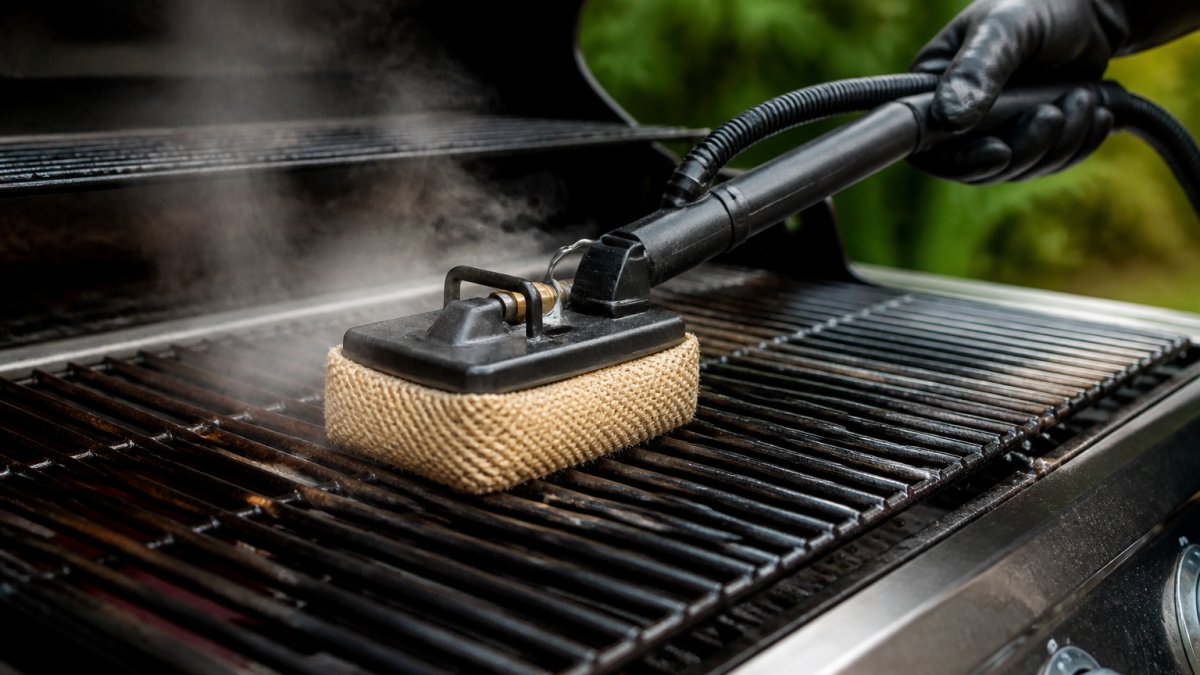
The Grill Daddy Pro uses this approach with SAFE BRISTLE-LOCK™ technology for added security. Fill it with water, heat your grill, and activate the steam valve. The steam does the heavy lifting while you guide the brush across the grates.
Steam cleaning has practical advantages beyond safety. It sanitizes grates where scraping alone cannot reach, eliminating bacteria and residue. The process requires no chemicals, making it environmentally friendly and safe for food contact.
NEW Grill Daddy Pro with Bristleless Grill Scrubber →
Bristle-Free Scrubbers and Coil-Style Options
Bristle-free scrubbers use abrasive pads instead of bristles to clean grates. Materials like Aramid fiber (similar to Kevlar) create a coarse surface that removes buildup without shedding. These pads are designed to prevent fibers from breaking free during normal use.
The Grill Daddy Pro with Bristleless Grill Scrubber combines steam power with a bristle-free Kevlar pad. The pad is dishwasher-safe and interchangeable, so you can replace it easily when it wears out. Because there are no bristles, there's no risk of bristle contamination.
Coil-style brushes use tightly wound stainless steel wire that resists shedding. The Grill Daddy Triton 3-in-1 Wound Brush uses industrial-strength 304 stainless steel with wires wound so tightly they don't separate during normal use.

Comparison of safe alternatives:
| Method | Safety | Effectiveness | Ease of Use | Cost |
|---|---|---|---|---|
| Steam cleaning | Excellent (no bristles) | Very high | Easy | $29.99-$59.99 |
| Bristle-free pads | Excellent (no bristles) | High | Easy | $19.99-$59.99 |
| Wound wire (tight coil) | Very good (tested retention) | High | Easy | $19.99 |
| Traditional wire brushes | Potential for bristle shedding | High | Easy | $10-$20 |
How to Clean Barbecue Grates Safely: A Step-by-Step Routine
A safe cleaning routine combines the right tool with proper technique and inspection. This approach minimizes risk while ensuring your grates stay clean and food-safe.
Before You Clean: Inspection and Preparation
Start by inspecting your brush before every use. Check for loose bristles, rust, or damage. If you notice any bristles moving freely, replace the brush immediately. Never use a worn or damaged brush on grates where food will cook.
Prepare your grill by preheating it for 10-15 minutes. Heat loosens burnt-on food and makes cleaning more effective. For steam-powered tools, this step is essential, the heat amplifies steam cleaning power significantly.
Pre-cleaning checklist:
- Inspect brush for loose bristles or damage
- Preheat grill to medium-high temperature
- Clear grates of large food debris
- Ensure brush is filled with water (for steam tools)
The Safe Cleaning Process
With your brush ready and grill hot, begin cleaning using firm, controlled strokes. Work methodically across the entire cooking surface, moving the brush in one direction, then perpendicular to that direction. This crosswise pattern ensures complete coverage.
For steam-powered tools, activate the water valve as you brush. The steam should flow steadily as you scrub. Don't rush, let the steam do the work. Aggressive scrubbing with steam tools is unnecessary and can damage grate finishes.
For bristle-free or wound-wire brushes, apply firm pressure and use the same crosswise pattern. The goal is to dislodge buildup without forcing the brush or creating unnecessary wear.
Cleaning technique:
- Brush in one direction across full width of grate
- Brush perpendicular to that direction
- Repeat for each grate section
- Work systematically from front to back
- Allow steam to do the work (don't force it)
After Cleaning: Post-Scrub Inspection
Once you've cleaned all grates, inspect them visually for any remaining debris or bristles. Run your hand across the surface (carefully, as it's hot) to feel for any rough spots or embedded bristles. Use a damp cloth to wipe down grates and remove any loose particles.
For steam tools, empty the water reservoir and leave the valve open to dry. This prevents mineral buildup and extends the tool's life.
Allow grates to cool slightly before cooking. This gives you time to do a final visual check and ensures any moisture evaporates before food touches the surface.
Post-cleaning steps:
- Visual inspection of all grates
- Hand check for rough spots or debris
- Wipe with damp cloth if needed
- Empty and dry steam tool
- Allow grates to cool slightly before cooking
Conclusion
Wire brushes have been the default grill cleaning tool for decades, but the risk of loose bristles contaminating food is real and documented in emergency rooms nationwide. Safer alternatives exist that clean just as effectively without the potential for bristle shedding.
Steam-powered tools like the Grill Daddy Pro eliminate bristles entirely by using heat and water instead. Bristle-free scrubbers with Kevlar pads and tightly wound coil brushes provide the mechanical cleaning power you need without shedding risk.

The choice between bristle and bristle-free tools comes down to your preference and grill size. For most grills, steam cleaning offers a great combination of safety, effectiveness, and ease of use.
Frequently Asked Questions
Is it safe to use a wire brush to clean your grill?
Some wire grill brushes carry a documented risk of bristle shedding. Metal bristles can detach during normal use and can end up on your cooking surface or in food. While many people use wire brushes without incident, the potential for loose bristles makes some of them less safe than bristle-free alternatives or steam-powered tools. If you choose to use a wire brush, inspect it regularly for signs of wear and replace it frequently.
What should I do if I accidentally swallow a grill brush bristle?
If you suspect you've swallowed a metal bristle, seek medical attention promptly. Do not wait for symptoms to develop. Go to an emergency room or urgent care and inform staff that you may have ingested a foreign body. Provide details about the bristle type and size if possible. Medical professionals can evaluate you with imaging and determine whether the bristle requires removal. Early intervention prevents complications like bowel perforation or internal injury.
How can I tell if a grill brush has loose bristles?
Inspect your brush before each use by running your hand firmly across the bristles in the direction they're set. If bristles pull out easily or feel loose, the brush may be shedding and should be replaced immediately. This applies to brushes that do not feature Bristle-Lock technology. Check the brush head for visible gaps, bent bristles, or areas where bristles are missing. Worn brushes may show visible corrosion or rust. If the brush is more than a season or two old and sees regular use, replacement is prudent regardless of appearance.
What can I use instead of a wire grill brush?
Safe alternatives include steam-powered cleaning tools that use heat and water to break down grease without loose bristles, bristle-free scrubbers made from abrasive materials like Kevlar or aramid fiber, and coil-style wound brushes where wires are tightly coiled to prevent shedding. Wooden scrapers and grill stones also work for some grates. Steam cleaners are particularly effective because they melt grease on contact and sanitize the surface without chemicals or the risk of bristle shedding.


