

Last Updated: November 14, 2026
Quick Summary
A steam grill cleaner is a grill brush with a water reservoir in the handle that turns water into steam on hot grates to loosen grease and food debris. It works well for routine maintenance, but heavy baked-on carbon may need scraping or a chemical grill cleaner first.
- Fill the handle reservoir, heat the grill, open the valve, and scrub crosswise across the bars.
- Brushing a cold grill does almost nothing because steam only forms on hot metal.
- Bristle heads suit grooved cast iron, while bristle-free Aramid scrubbers cover wide flat surfaces.
- Empty the water and leave the valve open after each use to prevent valve gumming.
- The Original model costs $29.99 and the Pro models cost $59.99 with replaceable heads.
Table of Contents
- What a Steam Grill Cleaner Actually Does
- Bristle vs Bristle-Free: A Real Comparison
- Choosing a Bristle-Free Grill Brush for Your Grates
- Step-by-Step: Cleaning a Hot Grill with Steam
- Tackling Baked-On Residue and Stubborn Buildup
- Durability, Replacement Heads, and Long-Term Value
- Common Mistakes and Limitations to Know
- Pick the Grill Daddy Model That Fits Your Setup
- Frequently Asked Questions
What a Steam Grill Cleaner Actually Does
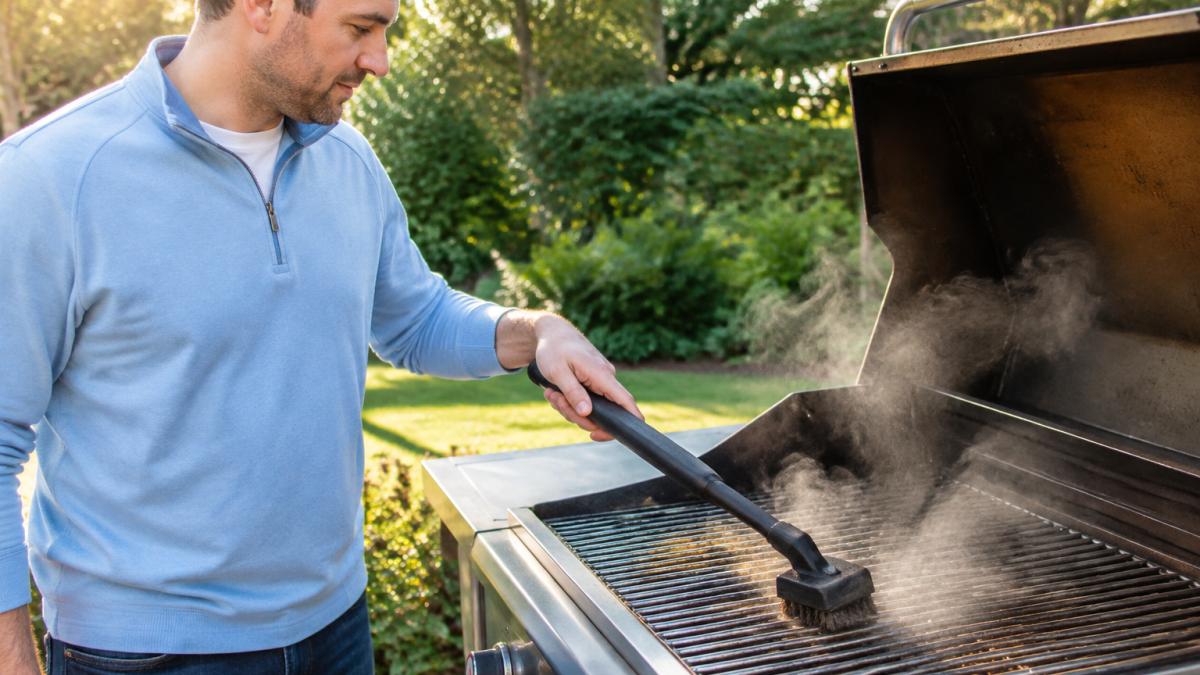
A steam grill cleaner is a grill brush with a water reservoir built into the handle. You fill it, heat the grill, open the valve, and scrub. Water seeps through the head and turns to steam on the hot grates, which helps loosen grease and food debris.
That distinction matters. The steam grill brush reviews we've collected show the same pattern again and again.
How the water-in-handle design works
Water lives in the handle, not in a bucket at your feet. A valve controls the flow. When the water hits hot grates, it turns to steam. No bucket means no mess.
Bristle vs Bristle-Free: A Real Comparison
Both work. The right pick depends on how you clean and what you're comfortable with. We offer both a bristle brush and a bristle-free scrubber.
| Feature | Bristle Head | Bristle-Free Scrubber |
|---|---|---|
| Material | 304 stainless wire, locked in place | Aramid coarse-fiber pad |
| Best at | Scrubbing between grate bars | Wide surface scrubbing, no wire at all |
| Grate types | Stainless, ceramic, cast iron | All common grill types |
| Cleaning | Removable, dishwasher safe | Dishwasher safe |
| Feel | Firmer, more aggressive | Softer contact, more surface area |
The Aramid pad suits cooks who simply prefer no wire in their toolkit. They're two tools for the same job.
If you want the full breakdown of the wire-free route, our bristle-free grill brush buyer's guide walks through head construction, fit, and care.
Choosing a Bristle-Free Grill Brush for Your Grates
Start with grate material, then match head size to grill size. That order saves you from buying a head that's too small for a wide gas grill or too aggressive for delicate ceramic.
The bristle-free grill brush category has grown fast, and the differences between models come down to three things: what the scrubber is made of, whether the head is replaceable, and whether the tool feeds water itself or needs a bucket.
Porcelain, stainless, and cast iron compatibility
Porcelain-coated grates need a light touch. Stainless steel grates respond well to steady, even pressure. Cast iron rewards steady, crosswise strokes.
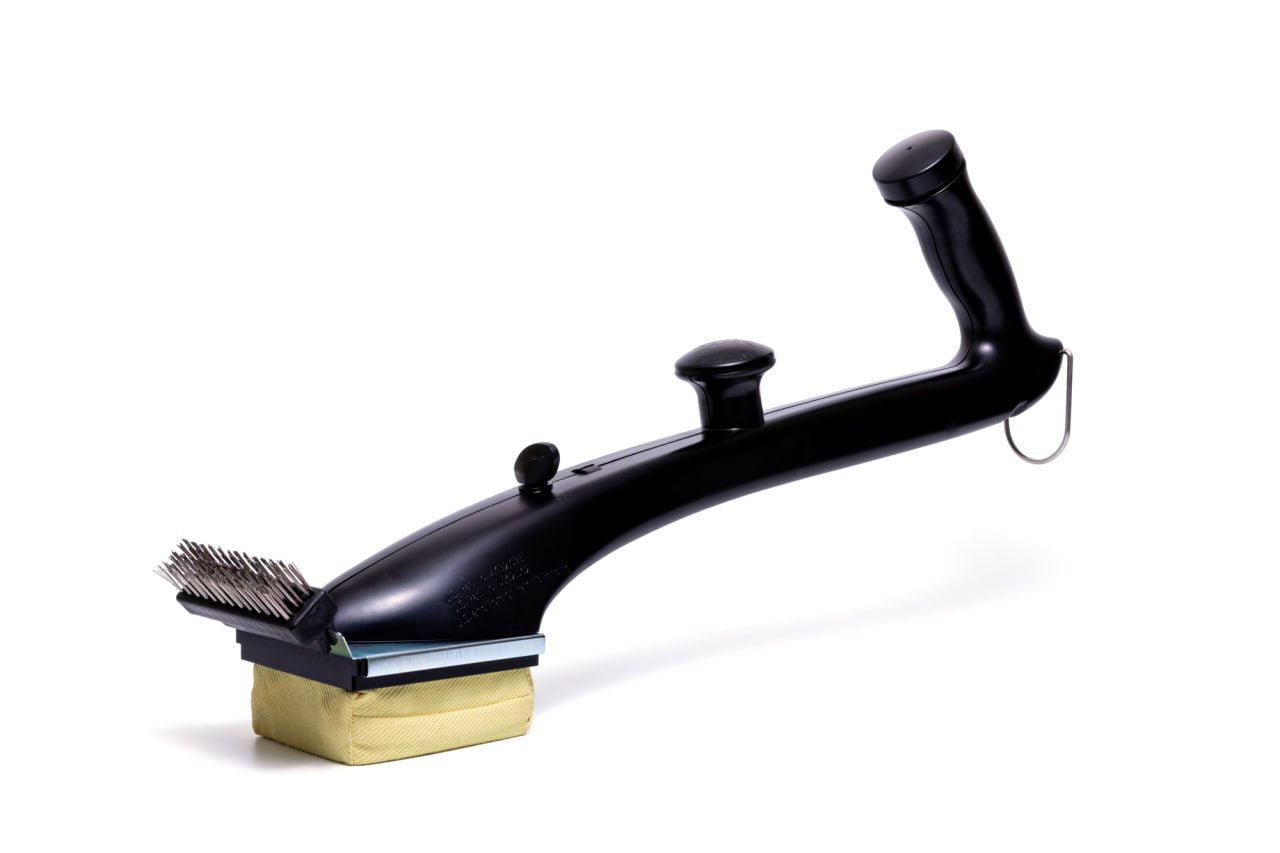
Our Grill Daddy Pro bristle-free steam brush uses an Aramid scrubber and a built-in grate scraper, and it's described as safe for all grill types including gas and charcoal.
Step-by-Step: Cleaning a Hot Grill with Steam
Here is the whole process, start to finish.
- Heat the grill with the lid closed until grates are hot.
- Fill the handle reservoir with water, valve off.
- Open the valve and start brushing. Steam forms on contact.
- Scrub crosswise across the bars, not along them.
- Use the scraper on welded-on spots.
- Loosen the fill cap for extra steam on tough sections.
- Empty the water and leave the valve open to dry.
For a longer walkthrough with photos, see our guide to cleaning grill grates with steam.
Watch out: brushing a cold grill does almost nothing. The steam only forms on hot metal, so if you skip the preheat you're just scraping.
Tackling Baked-On Residue and Stubborn Buildup
Baked-on residue can be polymerized grease, carbonized food, or a mix of both, and each responds differently to heat, moisture, and mechanical action.
A simple, repeatable test for baked-on residue
To track your own progress, use a consistent test.
- Prepare a test grate. Coat a section of clean stainless steel grate with a thin, even layer of a high-smoke-point cooking oil (such as canola) and heat the grill to 450-500°F (232-260°C) for 30 minutes. Repeat twice to build a polymerized layer.
- Cool and mark. Let the grate cool, then use a wire brush to remove loose flakes. Mark a 6-inch by 6-inch square with heat-resistant tape.
- Time the cleaning. Heat the grill to 450°F, then clean the marked square with your tool using a steady crosswise stroke for 30 seconds. Note how much residue remains and how many passes are needed for a visually clean surface.
- Record effort. Rate the pressure required (light, moderate, firm) and the total time to clean the square.
This test is not a laboratory standard, but it gives you a baseline.
What the residue types tell you
- Polymerized grease (a smooth, varnish-like film) softens best with sustained steam and light scrubbing. It often requires two or three passes with dwell time between.
- Carbonized food (black, crusty spots) needs mechanical action first, a scraper or a firm bristle brush, to crack the shell, then steam to lift the remainder.
- Sugary marinades can caramelize and harden like glass. These respond to heat and moisture but may need a longer dwell time (10-15 seconds per section) before scrubbing.
A common pattern is to alternate: scrape, steam, scrub, then scrape again. For a dedicated walkthrough, see our step-by-step guide to removing baked-on grill grease. The scraper breaks the top layer; steam penetrates the crack; the brush lifts the softened residue.
Troubleshooting stubborn spots
- Cold, thick carbon. If the grill has not been cleaned in months, a single pass will not suffice. Heat the grill, apply steam for 30 seconds, then scrape. Repeat up to three times. If the carbon is thicker than 1/8 inch, consider a dedicated grill stone or a commercial carbon remover before using the steam brush.
- Grates with deep grooves. Bristle brushes reach into grooves better than flat scrubbers. Use a bristle head for grooved cast iron, then finish with a bristle-free pad for the flat surfaces.
- Porcelain-coated grates. Avoid scrapers and stiff bristles on chipped or worn porcelain. Use a bristle-free scrubber with light pressure and keep the steam flowing to reduce friction.
For a longer walkthrough with photos, see our guide to cleaning grill grates with steam.
Watch out: brushing a cold grill does almost nothing. The steam only forms on hot metal, so if you skip the preheat you're just scraping.
Durability, Replacement Heads, and Long-Term Value
A steam brush is a tool you keep, not a disposable. The parts that wear are the head and, on some models, the internal valve assembly, and both are replaceable rather than forcing a whole new purchase. Because replaceable parts stretch a brush’s useful life, keeping a simple backup method in mind can make grill care more flexible, as Browns Outpost suggests.
What wears out and when
- Brush head. The bristles or scrubber pad degrade with use. Replace the head when the bristles or scrubber wear down. High-heat exposure and heavy pressure accelerate wear. Signs of wear include bent or missing bristles, a matted or glazed scrubber surface, and reduced steam flow through the head.
- Valve assembly. The water valve can gum up if water is left in the reservoir or if mineral deposits accumulate. Emptying and drying after each use helps keep the valve working.
- Handle and body. These are the most durable parts and generally outlast multiple heads. Cracks or leaks are rare but can occur if the tool is dropped or exposed to extreme cold.
Replacement parts and compatibility
Replacement heads are sized per model, so check the fit before ordering. The Original model takes its own head (SKU GB05522S).
Cost of ownership
To estimate cost per season, add the purchase price and the cost of replacement heads over the expected lifespan. For example, if a brush costs $59.99 and you replace the head once per season at $19.99, the first-year cost is $79.98. Over five years with one head replacement per year, the total is $159.94, or about $32 per season. A cheap $15 brush replaced every season costs $75 over five years but delivers less effective cleaning and generates more waste.
Maintenance that extends life
- Empty and dry after every use. Leave the valve open and the fill cap loose to allow airflow.
- Clean the head regularly. Most heads are dishwasher safe on the top rack. For heavy grease, soak in hot soapy water before washing.
- Descale the valve. If water flow slows, mix a 50/50 solution of white vinegar and water, fill the reservoir, and let it sit for 30 minutes. Rinse thoroughly.
When to replace versus repair
If only the head is worn, replace the head.
Watch out: don't leave water in the handle between cooks. Standing water is the fastest way to shorten the life of any steam tool.
Common Mistakes and Limitations to Know
Even a good steam brush has limits, and knowing them saves frustration.
- Skipping the preheat. No heat, no steam. This is the single most common mistake.
- Overfilling the reservoir. Water comes out too fast and cools the grates.
- Storing it wet. Empty the water and leave the valve open, or the valve gums up.
Watch out: don't leave water in the handle between cooks. Standing water is the fastest way to shorten the life of any steam tool.
Pick the Grill Daddy Model That Fits Your Setup
Match the tool to the grill, and the choice becomes simple.
- Small grill, tailgating, or oven racks: the Original at $29.99. Compact, 304 stainless bristles, replaceable head.
- Medium to large gas or charcoal grill, wire bristles: the Pro at $59.99 with SAFE BRISTLE-LOCK and adjustable steam flow.
- Same grill, no wire at all: the Pro Bristle-Free with the Aramid scrubber, also $59.99.
Both bristle and bristle-free options are available. Pick the one whose cleaning feel you prefer, and the bristle-free Pro is the pick if you want zero wire in the equation.
The grill you clean today is the grill that doesn't fight you next weekend. Grill Daddy Brush Company has been making steam-powered grill brushes in the USA since 2008, with SAFE BRISTLE-LOCK heads, bristle-free Aramid scrubber options, and replaceable parts backed by a lifetime warranty.
Frequently Asked Questions
Is Scrub Daddy good for cleaning grills?
For grill grates, a dedicated grill cleaner built for high heat works differently: steam-style brushes hold water in the handle and release it onto hot grates, where it turns to steam and helps loosen baked-on grease. If you want a tool designed specifically for grill grates, look for a steam grill brush or a bristle-free scrubber made for outdoor cooking.
How do you use a steam grill cleaner?
Preheat your grill, fill the handle reservoir with water while the valve is off, then turn the valve on and start scrubbing. The water seeps through the head and turns to steam on the hot grates, which helps melt grease and lift residue. Use the built-in scraper for tough spots, brush crosswise, then empty the water and leave the valve open to dry after cleaning.
Does a steam grill cleaner really sanitize grates?
Steam cleaning uses heat and water rather than chemical degreasers. The hot grates plus steam help loosen grease and food debris so you can scrub them away.
Will a steam brush damage stainless steel or porcelain grates?
Grill Daddy brushes are listed as safe for stainless steel, ceramic, and cast iron grates. The bristle-free Aramid scrubber model is described as safe for all grill types, including gas and charcoal. Match the head to your grate type, brush with steady pressure rather than heavy force, and replace worn heads so you are not scrubbing with flattened or damaged material.
Do I need a bucket or special water for a Grill Daddy brush?
No bucket is needed. The water sits in a reservoir inside the handle, so you fill it at the sink, preheat the grill, and open the valve when you start scrubbing. You do not dip the head in water, which keeps splashes off the burners. The Pro model uses water and heat, with no chemicals or batteries.
Grill Daddy model prices


