

Table of Contents
- Why Avoid Wire Brushes for Grill Grates
- Steam Cleaning Grill Grates: The Most Effective Method
- Natural Cleaning Agents for Grill Grates
- Best Tools for Cleaning Barbecue Grates Without Bristles
- Bristle-Free Grill Brush Benefits and Options
- Cleaning Cold vs. Warm Grates: What Works Best
- Material-Specific Cleaning for Cast Iron and Stainless Steel
- Maintenance Tips for Grill Longevity
- Frequently Asked Questions
Last Updated: September 21, 2026
Why Avoid Wire Brushes for Grill Grates
Learning how to clean grill grates without wire brushes has become essential, as wire brushes pose a real risk that most people overlook. Bristles can break off during scrubbing and end up in your food. This isn't theoretical, it happens frequently enough that health professionals and grill manufacturers have raised concerns about it.
Wire bristles bend, fray, and shed, a loose bristle is nearly invisible on dark grates and can end up in food.
How to Inspect Grates for Residual Bristles
After switching to safer methods, anxiety often persists because people don't know how to verify their grates are bristle-free. Here's a concrete inspection process that eliminates doubt.
Visual inspection (immediate, after cleaning):
- Let grates cool slightly so you can handle them safely.
- Run your hand slowly across the grate surface, feeling for protruding wires.
- Look closely at grooves and crevices; use a flashlight if needed.
- Wipe away any bristles with a damp cloth.
Tactile inspection (the most reliable method):
- Dampen a white cloth or paper towel.
- Rub the cloth firmly across the entire grate surface.
- Wire bristles are stiff enough to snag fabric and become visible.
- Repeat until the cloth comes away clean.
Magnet test (for metal bristles specifically):
- Use a strong magnet (a refrigerator magnet works, but a neodymium magnet is more sensitive).
- Slowly move the magnet across the grate surface, hovering just above the metal.
- If any steel bristles are present, they'll be attracted to the magnet and may stick to it.
- This test is especially useful for dark grates where visual inspection is harder.
Steam Cleaning Grill Grates: The Most Effective Method
Steam cleaning is the most powerful way to clean grill grates without wire brushes, using heat and water vapor to break down grease and carbonized food instantly, with zero abrasion and zero bristles.

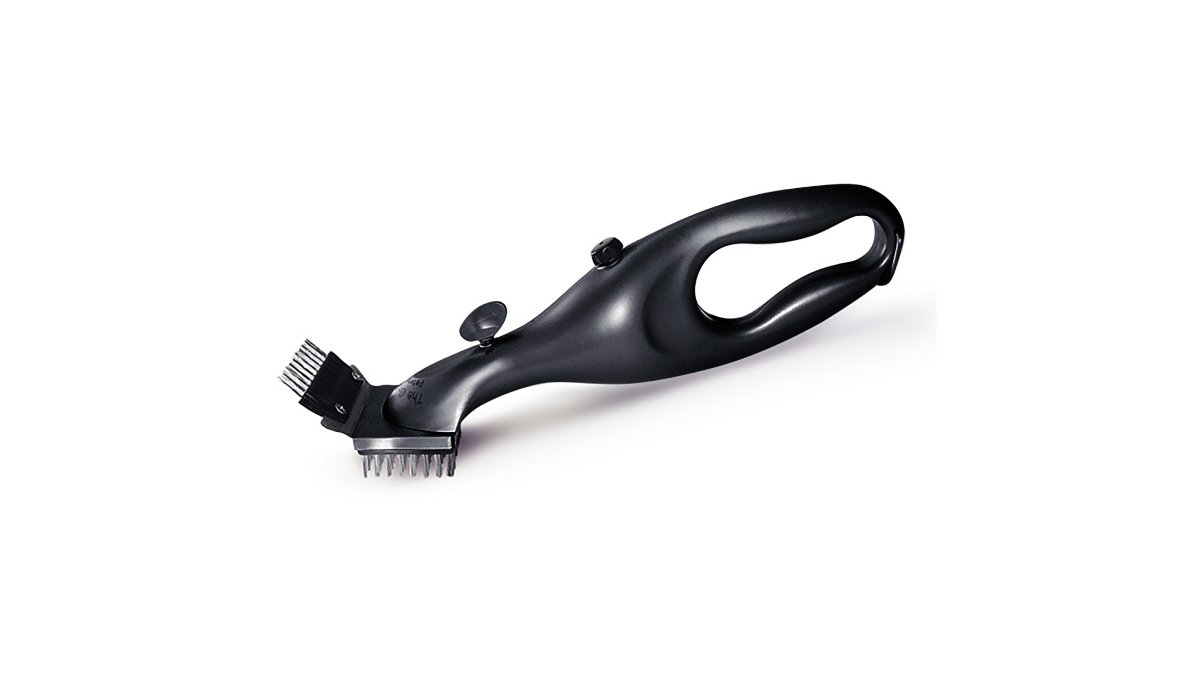
How Steam Cleaning Works on Grates
Steam cleaning works because heat liquefies grease and penetrates carbon buildup. The pressure of the steam does most of the work, you just guide the brush across the grate. Most grills clean in 5-10 minutes.
Step-by-Step Steam Cleaning Process
Follow this simple process:
- Preheat your grill for 5 minutes until grates are hot
- Fill the brush with water (room-temperature; grill heat creates the steam)
- Turn on the water valve slowly; steam forms immediately
- Scrub in crosswise motions across each grate
- Focus on stubborn spots, letting steam sit for a few seconds
- Turn off the valve and leave it open to air dry
This method works on all grate types: stainless steel, cast iron, ceramic, and porcelain-enameled grates.
Natural Cleaning Agents for Grill Grates
When you want to skip tools entirely, natural household items work surprisingly well. These methods are chemical-free, safe for all grate materials, and cost almost nothing.
Baking Soda and Vinegar Paste
Mix three parts baking soda with one part white vinegar to form a thick paste. Apply it directly to dirty grates and let it sit for 15-20 minutes. The acid breaks down carbonized food while the baking soda provides gentle scrubbing action. Wipe clean with a damp cloth.
Aluminum Foil Ball Method
Crumple a sheet of foil into a tight ball and use it like a brush. Heat your grates first, then rub the foil ball across them in circular motions. This method works best for light to moderate buildup; for heavy grease, combine it with steam cleaning or baking soda paste.
Onion and Lemon for Degreasing
Cut an onion in half and rub the cut side directly on hot grates. The natural acids break down grease; follow up with lemon juice for extra degreasing power. This method is excellent for regular maintenance between deep cleans.
Best Tools for Cleaning Barbecue Grates Without Bristles
The best tools for cleaning barbecue grates without bristles are steam-powered brushes and bristle-free scrubbers. Steam-powered tools combine heat, water, and controlled pressure to clean faster than any manual method. Bristle-free scrubbers use abrasive pads instead of wire. Small grills and occasional use favor manual bristle-free tools; larger grills and frequent cooking justify a steam brush investment.
Bristle-Free Grill Brush Benefits and Options
Bristle-free brushes use tough, non-shedding materials that scrub effectively without any ingestion hazard.
Aramid Fiber Scrubbers
Aramid fiber (Kevlar-like material) is abrasive enough to handle stubborn carbon but gentle enough for all grate types, stainless steel, cast iron, and ceramic, without damage. The material is also dishwasher-safe.
NEW Grill Daddy Pro with Bristleless →
Stainless Steel Grate Scrapers
Stainless steel scrapers are durable and simple, working best on cast iron and heavy-duty steel grates. On stainless steel or ceramic, use them carefully to avoid scratching. Many steam brushes include a small scraper attachment for extra-tough spots.
Cleaning Cold vs. Warm Grates: What Works Best
Warm grates (heated but not actively cooking) are ideal because heat makes grease flow and carbon crack. Steam cleaning and natural pastes work faster on warm grates, requiring less effort. Cold grates require more scrubbing force and longer soak times. The best practice is to clean grates while still warm from cooking, before food hardens and carbonizes, a quick warm-grate clean takes 5 minutes.
Material-Specific Cleaning for Cast Iron and Stainless Steel
Different grate materials have fundamentally different structures, finishes, and vulnerabilities. Understanding these differences prevents damage and ensures your chosen method works effectively.
Protecting Cast Iron Seasoning
Cast iron grates develop a protective seasoning layer, a polymerized oil coating that prevents rust and improves non-stick performance. Aggressive cleaning can strip this coating, exposing bare metal to oxidation. When you scrub too hard or use harsh chemicals, you're removing the polymerized oil layer that took months or years to build.
Best methods for cast iron:
- Steam cleaning uses heat and moisture without abrasion, penetrating carbon buildup while the gentle brush pressure doesn't strip seasoning.
- Baking soda paste is mildly alkaline but soft, cutting grease without aggressive scrubbing force.
- Aluminum foil balls are safe because foil is softer than cast iron, removing food without damaging the seasoning layer.
Methods to avoid on cast iron:
- Wire brushes (obvious, but worth repeating, they shed and damage seasoning simultaneously)
- Steel wool or metal scrapers (too abrasive; they gouge the seasoning and expose bare metal)
- Oven cleaner or commercial degreasers (these are alkaline solvents designed to strip grease; they strip seasoning too)
- Soaking in water (cast iron rusts when wet; prolonged moisture causes surface oxidation)
Stainless Steel Grate Care
Stainless steel is a non-porous alloy that resists rust through a self-healing oxide layer on the surface. It doesn't need seasoning, but its smoothness makes it prone to scratching, which creates a dull, streaky appearance. Stainless steel also shows water spots easily because minerals in water leave visible residue.
Best methods for stainless steel:
- Steam cleaning requires zero abrasion and eliminates scratching risk.
- Baking soda paste applied gently with a soft cloth cuts grease without scratching.
- Aluminum foil balls are safe if rubbed gently in circular motions.
- Onion and lemon are non-abrasive and leave no residue.
Methods to avoid on stainless steel:
- Wire brushes (shed bristles and create visible scratches)
- Steel wool (too abrasive; creates a dull, streaky finish)
- Metal scrapers or stainless steel scrapers (scratch the surface even though the material is hard)
- Chlorine-based cleaners (chlorine pits stainless steel, creating permanent damage)
- Abrasive scouring powders (scratch and dull the finish)
Porcelain-Coated and Ceramic Grates
These grates have a ceramic or porcelain enamel coating over steel or cast iron. The coating is smooth and heat-resistant but brittle; chips and cracks expose the underlying metal to rust.
Best methods:
- Steam cleaning is safest because it won't chip the coating.
- Baking soda paste works gently on the coating.
- Avoid metal scrapers, wire brushes, and aggressive scrubbing.
Decision Tree: Choosing a Method by Material
If your grates are cast iron: Use steam cleaning or baking soda paste. Avoid anything metal or abrasive.
Maintenance Tips for Grill Longevity
Clean after every cook. Warm grates clean in minutes; buildup that sits for weeks becomes stubborn carbon requiring aggressive scrubbing.
Frequently Asked Questions
What is the easiest way to clean grill grates without wire brushes?
Steam cleaning is the simplest and most effective method. Fill a steam brush with water, preheat your grill, turn on the water valve, and scrub. The steam melts grease and residue on contact without requiring a bucket, chemicals, or harsh scrubbing. For stubborn buildup, follow with a baking soda paste or aluminum foil ball for additional degreasing power.
Are steam-cleaning grill brushes effective for removing tough carbonized food?
Yes. Steam penetrates and breaks down carbonized food and burnt-on residue by softening the bond between debris and the grate surface. The combination of heat and moisture creates a pyrolytic effect that lifts stubborn grime without abrasive bristles.
Can I use natural cleaning agents like baking soda and vinegar on all grate types?
Baking soda and white vinegar work well on most grates, but technique matters. For cast iron, use the paste method and rinse thoroughly to prevent rust. For stainless steel and porcelain-enameled grates, apply the paste, let it sit for 15 minutes, then scrub gently. Avoid prolonged soaking of cast iron, which can cause surface oxidation. Always test on a small area first if your grates have a special finish.
What are the benefits of bristle-free grill brushes over traditional wire brushes?
Bristle-free scrubbers eliminate the risk of loose bristles ending up in food, a significant health concern with wire brushes. Aramid fiber and abrasive pad options provide durable scrubbing power without shedding and are safer for all grate materials. They also simplify maintenance, many are dishwasher-safe, and reduce environmental waste from frequent brush replacements.


