

Table of Contents
- How Steam Grill Cleaning Works
- Steam vs. Wire Bristles: Safety and Cleaning Power
- How to Clean Your Grill Without Chemicals
- Best Steam Grill Brush for Stainless Steel and Other Grate Types
- Durability, Maintenance, and Long-Term Value
- Choosing the Right Steam Grill Cleaner for Your Needs
- Conclusion: Is a Steam Grill Cleaner Worth the Investment?
- Frequently Asked Questions
Last Updated: September 23, 2026
How Steam Grill Cleaning Works
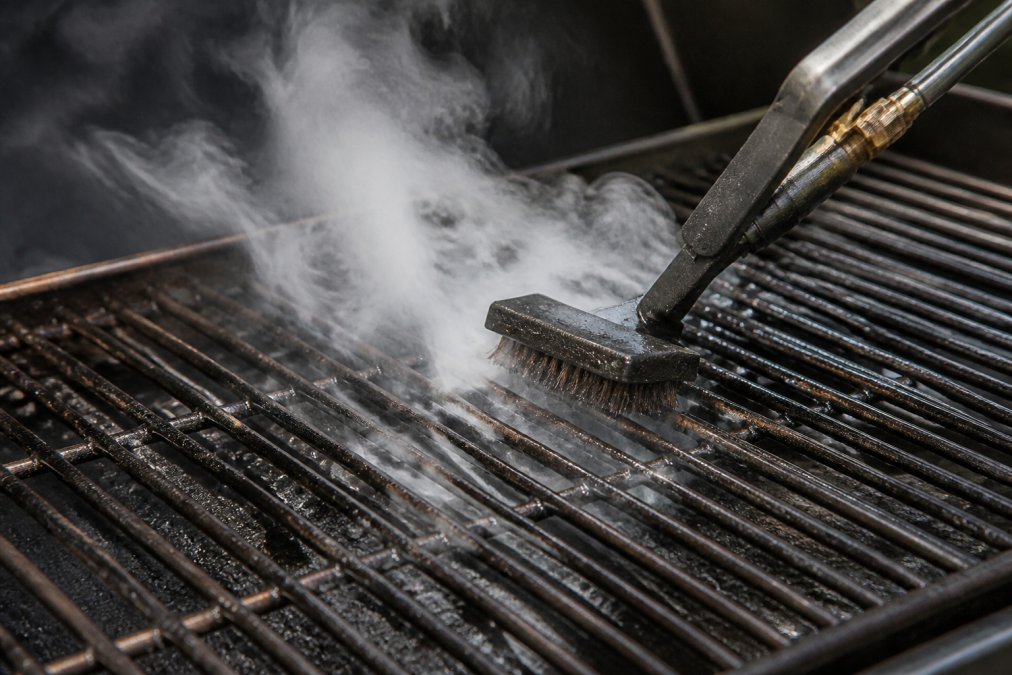
Steam grill cleaners use pressurized heat and water to dissolve grease and carbonized food without chemicals or scrubbing buckets. The process is straightforward: fill the brush with water, preheat your grill, activate the steam valve, and the thermal energy instantly melts stubborn grime on contact.
Water inside the brush heats against hot grill grates, converting to steam that penetrates charred debris and breaks down oxidized food particles in crevices where wire brushes struggle to reach.
The combination of heat and moisture loosens carbonized layers, allowing you to wipe them away with minimal effort, no harsh chemical degreasers needed.
Steam vs. Wire Bristles: Safety and Cleaning Power
Steam cleaners use either locked stainless steel bristles or bristle-free alternatives, eliminating the hazard of loose fibers that wire brushes shed into food.
Both bristle and bristle-free steam cleaners are safe and effective. Bristle-locked designs use mechanical retention technology; bristle-free options use abrasive Kevlar-like canvas pads.
Steam outperforms wire brushes on heavy grime because thermal action softens carbonized buildup first, making scrubbing easier and faster with fewer passes.
Steam works safely on all grate materials without surface damage, while wire bristles can scratch finishes or leave deposits that rust.
How to Clean Your Grill Without Chemicals
For light to moderate grime, fill your steam cleaner with water, heat the grill for 15 minutes, and scrub in a crosswise motion, most buildup lifts away in one pass.
For heavy buildup, loosen the fill cap slightly to increase steam pressure and penetrate deeper deposits, then use a scraper tool to remove loosened debris.
Empty water after each use and leave the valve open to dry completely, preventing mineral buildup and keeping components functional long-term.
Best Steam Grill Brush for Stainless Steel and Other Grate Types
Grate material determines which brush to choose and how to protect your grill's finish long-term.
Stainless Steel Grates
Stainless steel is the most forgiving grate material. Its corrosion resistance means steam won't cause rust or pitting. Bristle-based steam cleaners work excellently here; ensure bristles are mechanically locked so no fibers shed. Stainless steel grates dry quickly and don't require seasoning.
Cast Iron Grates
Cast iron benefits from steam cleaning's thermal action, which loosens grime without heavy mechanical force. Use bristle-free scrubbers to avoid scratching the seasoning. After cleaning, dry immediately and apply high-heat oil to restore seasoning and prevent rust.
Ceramic-Coated Grates
Steam cleaning is safe for ceramic grates because thermal action does most of the work. Use moderate pressure and avoid excessive scrubbing in one spot. Ceramic grates dry quickly and don't require seasoning.
Porcelain-Enameled Grates
Porcelain enamel is similar to ceramic in its durability and care requirements. The coating is chip-resistant but not chip-proof. Steam cleaning works well because the heat penetrates the enamel without damaging it, but avoid using excessive pressure or scrubbing the same spot repeatedly. Bristle-free options are ideal here to minimize any risk of surface contact that could cause chipping. After cleaning, allow the grates to cool slightly before rinsing with cool water, rapid temperature changes can stress the enamel coating.
The Original Grill Daddy® Steam Brush →
Long-Term Material Compatibility
Over 50+ cleaning cycles, material choice becomes even more critical. Stainless steel grates show no degradation from repeated steam cleaning, they actually look better over time as carbonized buildup is removed. Cast iron grates maintain their seasoning when you use bristle-free scrubbers and apply oil after each cleaning; repeated steam cleaning without proper drying or re-seasoning will eventually cause rust spots. Ceramic and porcelain grates remain intact if you avoid concentrated scrubbing pressure, but any chips that develop during cleaning will expand over time as rust forms underneath the coating.
The takeaway: match your brush type to your grate material. Stainless steel is forgiving and works with any brush design. Cast iron and ceramic/porcelain grates benefit from bristle-free scrubbers and proper post-cleaning care. Knowing your grate type before purchasing ensures you're not just buying a steam cleaner, you're investing in a tool that will protect your grill's finish for years.
Durability, Maintenance, and Long-Term Value
Steam grill cleaners built with quality materials outlast wire brushes significantly. Stainless steel bristles don't rust, and high-temperature ABS plastic resists cracking from thermal cycling. Internal components on quality models are replaceable, extending the tool's lifespan well beyond initial purchase. However, understanding what happens inside the tool over dozens of cleaning cycles, and how to troubleshoot when performance drops, is what separates a worthwhile investment from a frustrating one.
What Happens After 50+ Cleaning Cycles
Most reviews focus on the first few uses, but real durability emerges over time. After 20-30 cleaning cycles, mineral deposits begin accumulating inside the water chamber, especially in hard-water areas. This buildup reduces steam output gradually, you'll notice the brush takes longer to heat or produces less visible steam. This is not a failure; it's a maintenance trigger. Flushing the internal chamber with distilled water every 10-15 uses prevents this. Simply fill the brush with distilled water, heat it without using the steam valve, then empty and dry completely. This takes 5 minutes and restores full steam output. Consistent maintenance of these internal components ensures that the device remains reliable over the long term, a factor explored in detail within this handheld steamer review.
Bristle wear is minimal over 50+ cycles if the brush is quality-made. Stainless steel bristles don't degrade from heat or moisture, they can lose some rigidity if bent repeatedly, but this is rare with proper use. Bristle-free canvas pads wear more noticeably; after 60-80 cleaning cycles, the abrasive surface becomes smoother and requires slightly more pressure to achieve the same cleaning effect. At this point, replacing the pad (rather than the entire brush) costs a fraction of a new tool and restores cleaning power to like-new condition.
Common Steam Issues and How to Troubleshoot Them
Low steam output is the most common complaint after extended use. Before assuming the tool is failing, check three things: (1) Is the water chamber filled? A partially filled chamber won't generate adequate steam pressure. (2) Has the grill been preheated for at least 10-15 minutes? Steam generation depends on the grate temperature; a cold grill won't produce enough heat to convert water to steam. (3) Is the steam valve fully open? A partially closed valve restricts flow and reduces visible steam. If all three are correct and steam output is still weak, flush the internal chamber with distilled water as described above.
No steam at all usually indicates either an empty water chamber or a blocked valve. Empty the brush completely, refill with fresh water, and try again. If the valve is clogged with mineral deposits, soak the valve assembly in white vinegar for 30 minutes, then rinse thoroughly with distilled water.
Environmental and Health Benefits Over Time
Long-Term Value Calculation
Weather-resistant construction matters for outdoor storage. Quality steam cleaners feature coated finishes that withstand temperature swings, moisture, and UV exposure without deteriorating. This means your investment stays functional whether you store it in a garage or hang it on an outdoor wall year-round. Plastic components should be UV-stabilized to prevent brittleness; metal parts should be powder-coated or anodized to resist rust. These features add minimal cost but extend tool life by years.
Choosing the Right Steam Grill Cleaner for Your Needs
Your grill size determines the brush length and water capacity you need. Compact grills under 24 inches work fine with the Original Grill Daddy at 14 inches and 29.99 price point. Medium grills benefit from the Grill Daddy Pro's 22-inch handle and 16-ounce capacity. Large or commercial grills demand the Grand Grill Daddy Platinum's extended reach and heavier build.

Conclusion: Is a Steam Grill Cleaner Worth the Investment?
Steam grill cleaners deliver genuine value when you consider safety, cleaning effectiveness, and long-term durability. They eliminate the bristle-shedding risk that wire brushes pose, clean without harsh chemicals, and require minimal maintenance over years of use.
Frequently Asked Questions
Do steam grill cleaners actually remove stuck-on grease and carbonized food?
Yes. Steam grill cleaners work by converting water into high-temperature steam that breaks down burned-on food and grease on contact. The thermal energy melts stubborn residue without requiring harsh chemicals or aggressive scraping. Most users report that steam-powered brushes handle charred debris and grime buildup effectively, especially when combined with gentle scrubbing motions across the grill grates.
Are steam grill cleaners safe for stainless steel, ceramic, and cast iron grates?
Steam grill cleaners are safe for all three grate materials. The steam itself doesn't damage the surface, and the process avoids the risk of loose wire bristles contaminating food. For stainless steel specifically, steam cleaning preserves the grate seasoning and surface integrity without oxidation risk. Always use a bristle-free or properly secured bristle design to protect your grill surface and eliminate ingestion hazards.
How do steam grill cleaners compare to traditional wire brushes?
Steam cleaners offer several advantages: they eliminate the risk of loose wire bristles falling into food, require no chemicals or buckets, and sanitize grill surfaces through thermal cleaning. Wire brushes are faster for light debris but carry contamination risks and can rust or wear out. Steam brushes provide deeper cleaning power and longer durability, making them ideal for frequent grillers and those prioritizing safety and grate longevity.
What maintenance does a steam grill cleaner require?
Steam grill cleaners require minimal maintenance. After each use, empty any remaining water and leave the valve open to dry. Most models feature replaceable brush heads that can be swapped when bristles wear or the Kevlar scrubber becomes less abrasive. For models like the Grill Daddy Pro, all internal parts are replaceable with just a screwdriver, making long-term repairs simple and cost-effective compared to buying new tools.
Do I need special water or proprietary refills for a steam grill cleaner?
No. Steam grill cleaners use standard tap water and require no special additives or proprietary refills. The process is straightforward: fill the brush with water, heat your grill, and turn on the valve to release steam. This simplicity eliminates ongoing costs and makes steam cleaning more practical than chemical degreasers. NSF-certified models ensure the water system meets food-safety standards.


