

Table of Contents
- Why Maintaining Stainless Steel Grates Matters
- Daily Maintenance and Preheating Your Grill
- How to Deep Clean Gas Grill Grates
- Best Tools for Cleaning Stainless Steel Grates
- Preventing Rust on Stainless Steel Grates
- Steam Cleaning Grill Grates Benefits
- Common Mistakes to Avoid
- Frequently Asked Questions
Last Updated: September 25, 2026
Why Maintaining Stainless Steel Grates Matters
To maintain stainless steel grates and keep them built to last, you need to treat them right. Without proper maintenance, even premium grates succumb to rust, pitting, and stubborn carbon buildup that makes cooking less enjoyable and shortens the lifespan of your equipment. The good news: maintaining stainless steel grates doesn't require expensive chemicals or hours of scrubbing.
At Grill Daddy Brush Company, we understand that the real secret to grate longevity isn't complicated. It's about consistency, using the right approach, and understanding how stainless steel actually behaves under heat. Neglecting maintenance creates a cascade of problems: surface oxidation leads to pitting, pitting traps food particles and grease, and trapped debris accelerates corrosion. The cycle becomes harder to reverse the longer you wait.

This guide covers everything you need to know about how to maintain stainless steel grates, from daily routines that take minutes to deep cleaning methods that restore neglected surfaces. We'll walk through the tools that actually work, the mistakes that cause the most damage, and why steam cleaning has become the go-to solution for serious grillers who refuse to compromise on safety or results.
Daily Maintenance and Preheating Your Grill
Your most important maintenance step happens before you cook, not after. Preheating your grill serves a dual purpose: it brings grates to cooking temperature and it loosens residual debris from previous sessions.
Start by turning on your grill and letting it run for 10-15 minutes with the lid closed. This heat softens grease and carbon that's stuck to the surface. Once preheated, use a grill brush to scrub the grates in a crosswise motion, perpendicular to the grate bars. This direction pushes debris away from the cooking surface rather than grinding it in.
Many people skip preheating because they assume a quick brush is enough. That's where maintenance falls apart. Cold brushing scrapes the surface but leaves grease and carbon bonded to the metal. Warm metal releases these contaminants far more readily. The combination of heat plus brushing is what actually cleans.
After cooking, while the grill is still warm but not dangerously hot, brush the grates again. This removes fresh food residue before it hardens and bonds to the stainless steel. A quick 2-minute post-cook brush prevents the buildup that leads to rust and pitting.
Pro Tip: Brush in the same direction every time. Consistent motion prevents scratches from accumulating in random patterns, which can trap moisture and accelerate surface oxidation.
How to Deep Clean Gas Grill Grates
Deep cleaning goes beyond the daily routine. It targets carbon buildup, grease that's bonded to the metal, and surface discoloration that daily brushing can't remove.
The most effective deep clean starts with heat. Preheat your grill to maximum temperature and let it run for 20-30 minutes with the lid closed. This burns off surface carbon and loosens stubborn residue. Then brush aggressively with a sturdy grill brush, using firm pressure and multiple passes in different directions.
For grates with significant buildup, consider a soak. Remove the grates from the grill (if your model allows this) and soak them in warm soapy water for 30 minutes to an hour. This softens grease and makes scrubbing far more effective. After soaking, scrub with a nylon brush or scouring pad, avoid wire brushes on soaked grates, as they can scratch the stainless steel surface.
Removing Stubborn Food Residue and Carbon Buildup
Stubborn food residue and carbon buildup require targeted techniques. These deposits form when grease polymerizes under repeated heat exposure, creating a hard layer that won't budge with casual brushing.
The most reliable approach is high-heat burning followed by aggressive brushing. Crank your grill to full temperature, close the lid, and let it run for 25-30 minutes. The intense heat carbonizes remaining debris, turning it brittle and easier to remove. Brush immediately while the grates are still hot, this is when carbon releases most readily.
For truly stubborn spots, use a grate scraper or the edge of a metal spatula to chip away hardened carbon. Work at a shallow angle to avoid gouging the stainless steel. Follow up with a wire brush or abrasive scouring pad to smooth the surface and remove loose particles.
Soaking and Natural Cleaning Solutions
Soaking is one of the most underrated maintenance techniques. It transforms stubborn deposits from rock-hard to manageable with minimal physical effort.
Best Tools for Cleaning Stainless Steel Grates
The right tools make maintenance faster and more effective. Your choice depends on your grates' condition and your preferred cleaning method.
Wire brushes remain popular, but they come with a significant caveat: loose bristles can fall into food if the brush sheds. If you use a wire brush, inspect it regularly for loose bristles and replace it at the first sign of shedding.
NEW Grill Daddy Pro with Bristleless →
Nylon brushes and scouring pads are alternatives. They're softer than wire, so they're less likely to scratch stainless steel, and they don't shed bristles into your food. They're particularly effective after soaking, when deposits are already softened.
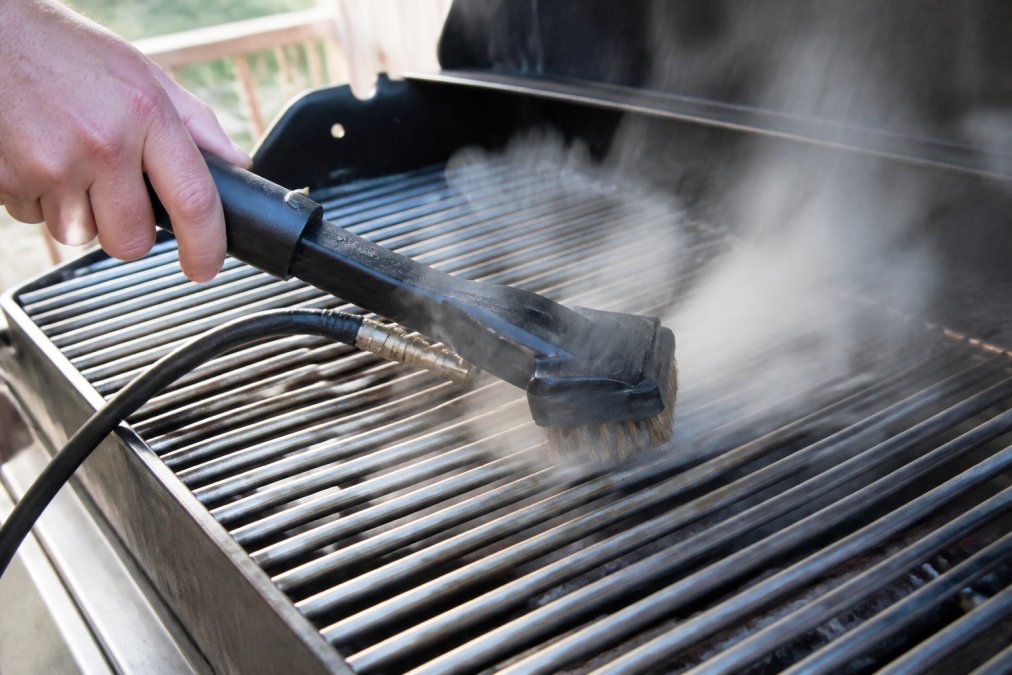
Steam cleaning brushes represent the modern solution. These tools use the natural power of steam, generated by heating water on your preheated grill, to melt grease and sanitize grates without chemicals. The Grill Daddy Pro features SAFE BRISTLE-LOCK technology that keeps bristles secure, eliminating the loose-bristle problem entirely. Simply fill the brush with water, heat your grill, turn the valve, and let steam do the work. The process takes minutes and requires no buckets, no mess, and no harsh degreasers. Steam cleaning handles most maintenance needs, with occasional soaking needed only for severe neglect.
For grates with light oxidation or stubborn spots, a grate scraper, a flat metal tool designed specifically for grates, provides targeted scraping power without damaging the underlying stainless steel. Use it at a shallow angle to chip away hardened carbon without gouging.
Preventing Rust on Stainless Steel Grates
Rust on stainless steel is preventable with proper care. Most rust starts with surface oxidation, a dull discoloration that appears when stainless steel is exposed to moisture and oxygen without a protective barrier.
The primary prevention strategy is removing moisture after cleaning. After any wash or soak, dry your grates thoroughly with a clean cloth. Moisture trapped on the surface accelerates oxidation. If your grates remain wet, even brief exposure to air can begin the oxidation process.
Regular brushing during preheating also prevents rust by removing debris that traps moisture. Carbon buildup and grease create pockets where water collects, accelerating corrosion. Daily maintenance keeps these moisture traps from forming.
Avoid leaving your grill uncovered in harsh weather. Rain, salt spray, and humidity all accelerate surface oxidation on stainless steel. A grill cover protects your investment and reduces maintenance frequency significantly.
Seasoning and Protective Coatings
Seasoning stainless steel grates creates a thin protective barrier that resists oxidation and improves non-stick properties. This process is simpler than seasoning cast iron but equally effective.
After cleaning and drying your grates completely, apply a very light coat of high-heat oil, canola oil or grapeseed oil work well. Use a cloth or paper towel to wipe the oil across the grates, then wipe away excess. The goal is a thin, nearly invisible coating, not a thick layer. Too much oil creates sticky buildup.
Heat your grill to medium-high temperature for 10-15 minutes to set the oil coating. This process polymerizes the oil slightly, creating a durable protective layer. The coating reduces direct contact between stainless steel and moisture, slowing oxidation.
Repeat this seasoning process every 2-4 weeks during grilling season, or after any deep clean. Over time, the protective coating builds up and becomes more effective.
Steam Cleaning Grill Grates Benefits
Steam cleaning has become the preferred method for serious grillers because it addresses multiple maintenance challenges simultaneously. The process is straightforward: fill your steam brush with water, preheat your grill, turn the valve, and scrub. The steam melts grease and sanitizes the grates where scraping cannot reach.
Common Mistakes to Avoid
Understanding what not to do prevents damage that's expensive or impossible to repair. The most common mistake is using the wrong brush type. Wire brushes with loose bristles create a genuine safety hazard, bristles can shed into food without you noticing. If you use a wire brush, inspect it frequently and replace it at the first sign of shedding. Better yet, switch to bristle-free options or steam cleaning.

Frequently Asked Questions
Do stainless steel grill grates need to be oiled?
Yes, seasoning stainless steel grates with a light coat of high-heat oil like canola oil helps prevent surface oxidation and corrosion. After cleaning and while grates are still warm, apply oil with a cloth and wipe away excess. This protective coating reduces pitting and extends grate life. Reapply after every few uses or monthly if you grill frequently.
What is the best way to prevent food from sticking to stainless steel grates?
Preheat your grill for 10-15 minutes before cooking to allow grates to reach proper temperature. Clean grates thoroughly before each use to remove residual buildup. Season grates with a thin layer of oil after preheating. Avoid moving food too early; let it develop a sear before flipping. A properly maintained, seasoned surface naturally resists sticking.
How often should you deep clean stainless steel grates?
Deep clean stainless steel grates every 3-6 months depending on usage frequency. If you grill weekly, aim for monthly deep cleaning. Signs you need a deep clean include stubborn carbon buildup, visible corrosion, or food sticking despite preheating. Regular daily maintenance and weekly light cleaning reduce how often you need intensive scrubbing.
Can I use dishwasher-safe cleaning tools on my grill grates?
Some grill cleaning tools are dishwasher-safe for convenience. For example, the Kevlar scrubber of the Grill Daddy Pro with Bristleless Grill Scrubber is dishwasher-safe. However, hand-wash abrasive scrubbers like Kevlar pads to extend their lifespan. Avoid putting stainless steel grates themselves in the dishwasher, as harsh detergents and heat cycles can damage the finish and promote corrosion. Always hand-clean grates with appropriate tools.


