

Table of Contents
- Why Wire-Bristle Brushes Pose Real Health Risks
- How Bristle Detachment Happens During Cleaning
- Symptoms of Accidental Wire Bristle Ingestion
- Medical Risks: From Tongue Laceration to Bowel Perforation
- How to Clean Grill Grates Without a Wire Brush
- Best Tools for Cleaning Barbecue Grates Safely
- Visual Inspection Protocols and Post-Grilling Food Safety
- Proper Grill Maintenance to Prevent Bristle Shedding
- Frequently Asked Questions
Last Updated: September 27, 2026
Why Wire-Bristle Brushes Pose Real Health Risks
Wire grill brushes shed metal filaments during cleaning, tiny fragments that can lodge in grill grates and end up on food. These bristles are difficult to see and easy to ingest accidentally, creating a genuine health risk.
Sharp metal fragments can injure the aerodigestive tract, causing injuries from minor tongue lacerations to serious gastrointestinal complications. Bristle shedding often happens without the user noticing, a brush that looks intact may have already shed bristles during cleaning.
Bristle detachment is a predictable consequence of using metal-bristle tools on hot grates. Understanding how this happens, recognizing symptoms of ingestion, and knowing safer alternatives are essential for regular grillers.
How Bristle Detachment Happens During Cleaning
When you scrub hot grates with a wire-bristle brush, bristles experience intense stress from friction, heat, and pressure, gradually weakening even when welded or crimped to the brush head.
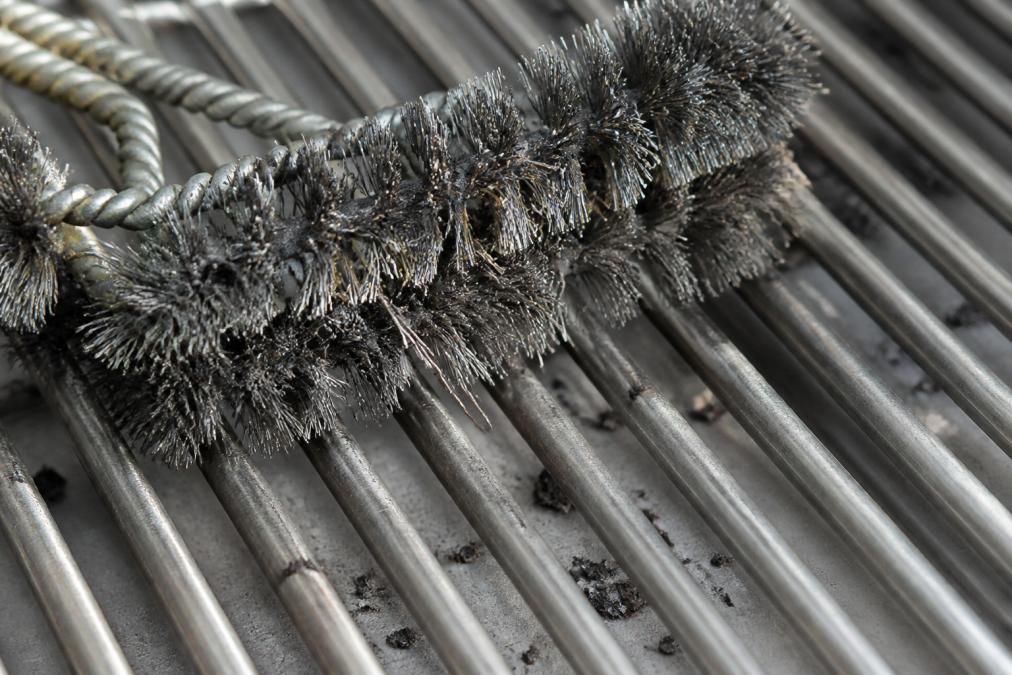
Thermal cycling, expansion during heating and contraction during cooling, loosens the bond between bristles and the brush head, causing individual bristles to work free and fall onto grates.
Bristle loss accelerates with age, a brush fine in year one may shed frequently by year two or three. Small bristles wedge into crevices or hide under buildup, remaining undetectable.
Scrubbing harder increases stress on bristles and accelerates detachment without improving cleaning results.
Symptoms of Accidental Wire Bristle Ingestion
Recognizing symptoms of wire bristle ingestion enables early detection and prevention of serious complications. Symptoms vary by location and size; some bristles pass unnoticed while others cause immediate problems.
Early symptoms include sharp sensations in the mouth or throat, difficulty swallowing, mild discomfort resembling a splinter, or a metallic taste.
Chest pain during swallowing suggests esophageal lodging; abdominal pain, nausea, or vomiting suggest stomach or intestinal involvement. These warrant immediate medical attention.
Not all ingested bristles produce immediate symptoms; some cause delayed or intermittent discomfort. This unpredictability makes prevention far more important than managing symptoms after the fact.
If you experience throat pain or difficulty swallowing after grilling, seek medical evaluation and mention the possibility of bristle ingestion.
Medical Risks: From Tongue Laceration to Bowel Perforation
Wire bristle ingestion consequences range from minor to life-threatening, underscoring why prevention is critical.
Tongue lacerations are the mildest injury, typically healing within days but causing pain while eating or drinking.
Tonsillar injuries can cause bleeding and swelling, potentially requiring medical intervention.
Esophageal perforations are medical emergencies; they can cause bleeding, infection, or mediastinitis if untreated.
Once a bristle reaches the stomach, it may cause gastric ulceration or perforation. The stomach's acid environment doesn't dissolve metal, so the bristle remains intact and can irritate the stomach lining. Gastric perforations are serious and may require surgical intervention.
Bowel perforation represents the most severe risk. If a bristle passes through the stomach and into the small intestine or colon, it can puncture the bowel wall. Bowel perforation leads to peritonitis (infection in the abdominal cavity), which is a medical emergency requiring immediate surgery (Bowel Perforation). Untreated peritonitis can be fatal.
Diagnostic imaging, including X-rays or CT scans, may be needed to locate a bristle if symptoms suggest ingestion. Radiopaque bristles (those visible on X-rays) are easier to locate than non-radiopaque ones. Endoscopy, a procedure where a camera is inserted down the throat, allows doctors to visualize and sometimes remove bristles from the esophagus or stomach.
How to Clean Grill Grates Without a Wire Brush
Effective grill cleaning doesn't require wire bristles. Multiple proven alternatives remove grease, grime, and buildup without the bristle shedding risk. The key is understanding which method works best for your grate material and the type of buildup you're dealing with.
NEW Grill Daddy Pro with Bristleless →
Steam cleaning stands out as the most effective alternative for most grilling situations. Steam penetrates and loosens stubborn grease and burned-on residue, making them easy to wipe away. The process is simple: heat your grill, fill your steam cleaner with water, turn on the water valve, and let the steam do the work. No bucket, no mess, no loose bristles. Steam works on stainless steel, ceramic, and cast iron grates without damaging the surface.
Brass brushes offer a safer bristle option than steel. Brass is softer than steel, so bristles shed less frequently and pose a lower risk if ingestion occurs. However, brass bristles can still detach, making them a compromise solution rather than a truly safe option.
Wooden or bamboo scrubbers provide gentle cleaning without metal bristles. These work best for light cleanup rather than heavily charred buildup. They're safe, biodegradable, and won't shed metal fragments, though they wear out faster than metal alternatives.
Aluminum foil balled up and used as a scrubber is a surprisingly effective option for routine cleaning. The foil removes buildup through abrasion without producing sharp metal fragments. It's inexpensive, disposable, and works reasonably well on cast iron and steel grates.
Nylon or plastic bristle brushes are safer than wire alternatives, though they wear out quickly. The bristles are less likely to detach than metal ones, but they can still shed. They're best used for light maintenance rather than heavy-duty cleaning.
Chemical degreasers can supplement mechanical cleaning, though many grilling enthusiasts prefer to avoid harsh chemicals on cooking surfaces. If you use degreasers, rinse thoroughly before grilling to prevent chemical residue on food.
Best Tools for Cleaning Barbecue Grates Safely
Steam-Powered Cleaning with Bristle-Lock Technology
Steam-powered grill brushes represent the safest and most effective approach to grate cleaning. Unlike wire brushes that shed bristles, steam tools use water vapor to break down grease and grime, eliminating the bristle shedding problem entirely. For users who prefer a bristle option, the Grill Daddy Pro's Bristle-Lock Technology secures each bristle firmly in place, significantly reducing the risk of detachment compared to traditional wire brushes.
The steam cleaning process is straightforward: preheat your grill to operating temperature, fill the steam brush with water, activate the valve, and let steam penetrate the buildup. The heat and moisture work together to loosen grease and charred food particles. You then scrub with minimal pressure, the steam does most of the work. This approach sanitizes grates where scraping alone cannot reach, eliminating bacteria and food residue that standard brushing misses.
Steam tools work on all grate types: stainless steel, ceramic, and cast iron. They won't damage finishes or leave chemical residue. The process is chemical-free, making it ideal for health-conscious grillers and those concerned about environmental impact.
For users who prefer a bristle option, the Grill Daddy Pro's Bristle-Lock Technology secures each bristle firmly in place, significantly reducing the risk of detachment compared to traditional wire brushes.
Bristle-Free Grill Scrubbers for Maximum Safety
Bristle-free scrubbers eliminate the detachment risk entirely by replacing metal or nylon bristles with abrasive materials that won't shed into food. The Grill Daddy Pro Bristleless Grill Scrubber uses an abrasive Kevlar-like canvas pad that provides aggressive cleaning power without any loose bristles.

Aramid fibers, which form the basis of these bristle-free scrubbers, are engineered for durability and heat resistance. These materials maintain their integrity at high temperatures and resist degradation from repeated use. The abrasive surface cuts through grease and buildup through mechanical action rather than bristle friction, making them both effective and safe.
Bristle-free scrubbers work through direct surface contact. The abrasive material grinds away buildup rather than brushing it loose. This approach is particularly effective for cast iron grates, where the slightly rougher surface helps the scrubber grip and clean. On stainless steel, the scrubber glides smoothly while still removing stubborn residue.
These tools are dishwasher-safe and long-lasting. Unlike wire brushes that degrade quickly, bristle-free scrubbers maintain their cleaning power season after season. They're an investment in safety and convenience that pays off through extended use.
Visual Inspection Protocols and Post-Grilling Food Safety
Even with safer cleaning tools, a final visual inspection before cooking protects against any remaining risks. Establishing a consistent inspection routine catches problems before they reach your food.
Start with a close visual examination of all grate surfaces, paying special attention to crevices and areas where bristles might lodge.
Proper Grill Maintenance to Prevent Bristle Shedding
Regular maintenance prevents bristle shedding before it becomes a problem. A consistent care routine keeps your grates clean and your grill functioning safely.
Frequently Asked Questions
Can wire brush bristles actually get into food on my grill?
Yes. Wire bristles detach during cleaning and can remain on grates even after brushing. When food contacts contaminated grates, bristles transfer directly onto burgers, chicken, and other items. The risk increases with older brushes showing visible wear or bristle degradation. Metal filaments are difficult to see and easily ingested without detection.
What are the symptoms if I accidentally ingest grill brush bristles?
Symptoms vary by location and size of ingestion. Common signs include throat pain, difficulty swallowing, tongue laceration, or tonsillar injury. Larger bristles may cause esophageal injury or stomach discomfort. Seek emergency care if you experience severe pain, bleeding, vomiting, or signs of bowel perforation such as severe abdominal pain and fever.
How do bristle-free grill scrubbers compare to wire brushes for cleaning?
Bristle-free scrubbers like Aramid or Kevlar pads clean as effectively as wire brushes by using abrasive material and steam to break down grease and residue. They eliminate ingestion risk entirely while delivering the same cleaning power. Steam-powered systems activate the scrubber's abrasive surface, melting away burnt-on debris without chemical degreasers or water buckets.
What's the safest way to clean grill grates without wire brushes?
Steam-powered cleaning combined with bristle-free scrubbers offers the safest approach. Fill the device with water, preheat your grill, and activate the steam valve while scrubbing with an abrasive pad. This method sanitizes grates, removes grease and debris, and eliminates bristle contamination risk. Follow cleaning with a visual inspection of grates to confirm no debris remains before cooking.


