

Table of Contents
- Why Heavy Duty Steam Grill Cleaners Outperform Traditional Methods
- How to Clean Grill Grates with Steam
- Steam-Powered Grill Brush Options: Size, Power, and Price
- Bristle vs Bristle-Free Steam Grill Brush: Which Is Right for You
- Steam Cleaner for Grill Grates: Material Compatibility and Safety
- Step-by-Step Cleaning and Maintenance
- Common Mistakes to Avoid When Steam Cleaning Your Grill
- What Serious Grillers Should Know Before Buying
- Frequently Asked Questions
Last Updated: October 17, 2026
Why Heavy Duty Steam Grill Cleaners Outperform Traditional Methods
A heavy duty steam grill cleaner transforms grill maintenance from a tedious scrubbing session into a fast, chemical-free process. The steam melts grease on contact, loosening stuck-on residue that wire brushes struggle to reach. At Grill Daddy Brush Company, we've spent nearly two decades revolutionizing grill maintenance with our innovative line of steam-cleaning brushes.

The difference comes down to physics: heat breaks down grease far more effectively than friction alone. Steam penetrates crevices where bristles cannot reach, sanitizing surfaces where bacteria hide. Unlike bucket-and-brush approaches, steam cleaning produces zero mess, no splashing, no chemical runoff, no bristles shedding into your burners.
A heavy duty steam grill cleaner protects your grill's longevity and ensures every meal cooks on a sanitized surface. The process is straightforward: preheat your grill, fill the brush with water, turn on the valve, and scrub. No special equipment, no mixing solutions, no complicated setup.
How to Clean Grill Grates with Steam
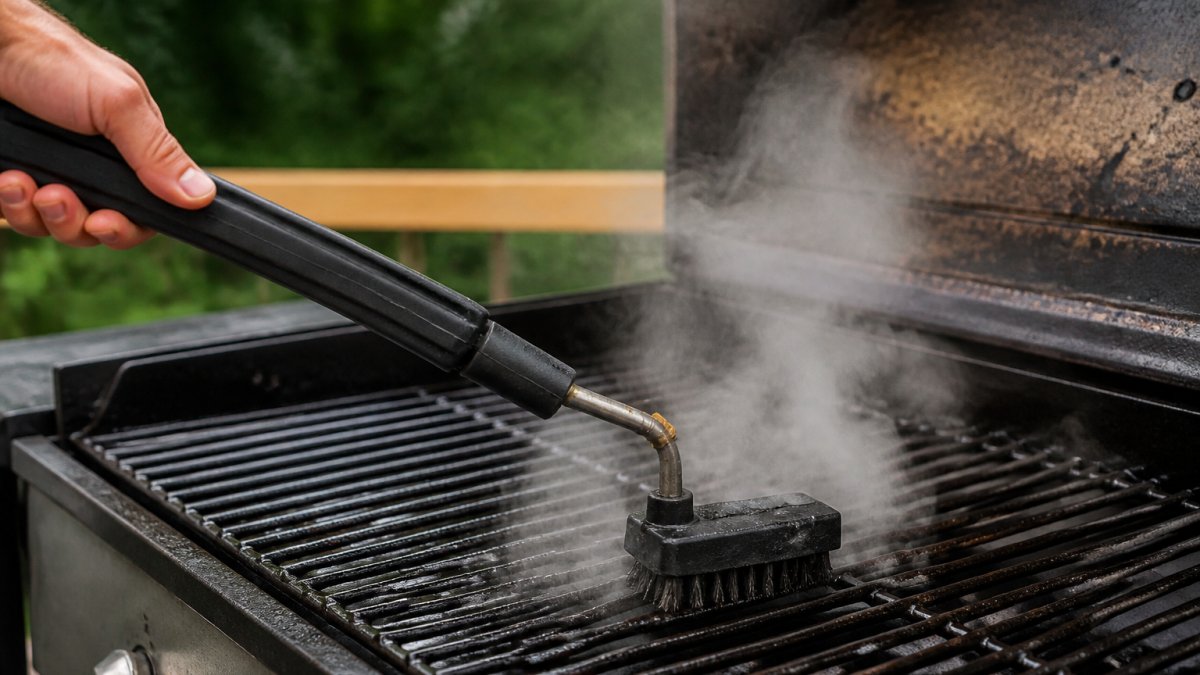
Cleaning grill grates with steam follows a simple three-step process. First, preheat your grill to operating temperature. Second, fill your steam cleaner with water (the valve stays off during filling). Third, turn the valve on and scrub in a crosswise motion across the grates.
The steam loosens burnt-on food and grease as you brush. For extra-stubborn residue, loosen the fill cap slightly to increase steam pressure. A single pass removes most buildup; heavily neglected grills may need two. The scraper side handles the toughest caked-on deposits.
After cleaning, empty any remaining water and leave the valve open to dry. This prevents mineral buildup inside the tank and keeps your brush ready for next use. The entire process takes minutes, far faster than soaking, scrubbing, and rinsing with traditional methods.
Steam-Powered Grill Brush Options: Size, Power, and Price
Choosing the right heavy duty steam grill cleaner depends on grill size, frequency of use, and bristle preference. Grill Daddy Brush Company offers three categories: compact, mid-range, and heavy-duty.
Compact Models for Smaller Grills
The Original Grill Daddy Steam Brush delivers professional steam cleaning in a compact 14-inch design. It suits apartment dwellers, tailgaters, and owners of smaller gas or charcoal grills. It holds enough water for extended sessions and features rust-proof stainless steel bristles locked securely in place.
This model is ideal if you grill occasionally and maintain your grates regularly. It's also versatile enough to clean oven racks and other kitchen cooking surfaces.
Mid-Range Brushes for Standard Grills
The Grill Daddy Pro represents the sweet spot for most backyard grillers. At 22 inches long, it reaches every corner of standard-sized grills. The 16-ounce water tank provides extended cleaning power, and the adjustable steam-flow valve controls intensity based on how dirty your grates are.

This model features SAFE BRISTLE-LOCK technology, ensuring bristles stay locked in place throughout cleaning. The heat-resistant ABS plastic body is NSF-certified for water safety. Removable brush heads let you replace them as needed rather than buying an entirely new cleaner.
Heavy-Duty Models for Large or Neglected Grills
The Grand Grill Daddy Platinum is engineered for commercial-grade performance. At 17 inches long and weighing 3 pounds, this aerospace-grade aluminum brush delivers maximum use and heat retention. Industrial-strength 304 stainless steel bristles handle heavily caked-on grease, and the larger water capacity means fewer refills.
This model is built for grillers who maintain large grills, host frequent barbecues, or tackle neglected surfaces. The weather-resistant finish withstands outdoor conditions year-round, and a bonus meat thermometer is included.
| Model | Water Tank | Best For | Key Feature |
|---|---|---|---|
| Original Grill Daddy | Compact | Small grills, occasional use | Affordable entry point |
| Grill Daddy Pro | 16 oz | Standard grills, regular use | Adjustable steam flow |
| Grand Grill Daddy Platinum | Larger capacity | Large grills, heavy buildup | Aerospace aluminum, max use |
Bristle vs Bristle-Free Steam Grill Brush: Which Is Right for You
Both bristle and bristle-free designs deliver effective steam cleaning. The choice depends on your preference and your grill's material composition.
Stainless steel bristles locked securely in place have been safe for over 20 years with no incidents from Grill Daddy products. Industrial-grade 304 stainless steel bristles are rust-proof and durable, excelling at scrubbing stubborn residue on all grate materials. Many experienced grillers prefer bristles for maximum scrubbing control and aggressive cleaning power.

Bristle-free scrubbers use Aramid fiber (Kevlar-like material) in a coarse canvas pad. The pad is dishwasher-safe and resists bending or collapsing under pressure. It works equally well on all grate types and delivers comparable cleaning performance, appealing to grillers who prefer the simplicity of a single-piece scrubbing surface.
Both designs integrate with the steam-powered process seamlessly. The heat and moisture do most of the work; the bristles or pad simply apply pressure and scrubbing motion. Choose bristles for maximum cleaning aggression and traditional reliability, or bristle-free for a dishwasher-safe scrubbing head.
Steam Cleaner for Grill Grates: Material Compatibility and Safety
A heavy duty steam grill cleaner is safe on stainless steel, ceramic, and cast iron grates. Steam and mechanical scrubbing do not damage these materials when applied correctly, just adjust your technique to each.
Stainless steel grates are nearly indestructible with steam cleaning; the heat and moisture help maintain the finish. Scrub crosswise to avoid scratch patterns that follow grain direction. Ceramic-coated grates require gentler pressure but respond well to steam. Cast iron benefits because the heat helps season the surface over time, and the moisture does not cause rust if you empty the tank and leave the valve open to dry after each use.
Never use a heavy duty steam grill cleaner on painted surfaces or older grills with non-standard coatings. Test on a small hidden area first if you're unsure about your grill's material composition.
According to NSF International safety standards for food-contact surfaces, steam cleaning at proper temperatures sanitizes cooking surfaces effectively without chemical residue. Grill Daddy products are NSF-certified for use with potable water, ensuring your grates remain food-safe throughout the cleaning process.
Step-by-Step Cleaning and Maintenance
Follow this proven process to maximize cleaning results and extend your steam cleaner's lifespan.
Step 1: Preheat Your Grill (5 minutes) Turn on your grill and let it reach normal operating temperature. This activates the steam's cleaning power and helps grease flow away from the grates.
Step 2: Fill Your Steam Cleaner (1 minute) With the water valve OFF, fill your brush with clean water. Do not overfill, most models have a fill line. Use tap water; special water is not required.
Grand Grill Daddy® Platinum – Voted #1 Steam Grill Brush →
Step 3: Turn On the Valve and Begin Scrubbing (3-5 minutes) Open the water valve slowly. Water flows through the heated brush head and converts to steam.
Step 4: Address Stubborn Areas (as needed) For extra-heavy buildup, loosen the fill cap slightly to increase steam pressure. Flip the brush to use the crud-buster scraper side. Make multiple passes on heavily soiled spots.
Step 5: Empty and Dry (2 minutes) After cleaning, turn off the valve and empty any remaining water. Leave the valve open to air dry.
Common Mistakes to Avoid When Steam Cleaning Your Grill
Many grillers make predictable errors that reduce cleaning results or damage equipment. Awareness prevents them.
Mistake 1: Cleaning a Cold Grill Steam cleaning works because heat loosens grease. A cold grill defeats the purpose. Always preheat your grill to operating temperature before beginning.
Mistake 2: Overfilling the Water Tank Excess water reduces steam generation and can leak from the valve. Fill to the line marked on your brush, not beyond. Slightly underfilling is better than overfilling.
Mistake 3: Scrubbing Lengthwise Instead of Crosswise Lengthwise scrubbing can push debris between the grates. Crosswise motion breaks up grease more effectively and keeps debris on top of the grates where it's easily removed.
Mistake 4: Leaving Water in the Tank After Cleaning Stagnant water inside the tank promotes mineral buildup and reduces steam generation over time.
Mistake 5: Using Hot Water Instead of Cool Water Cool tap water is all you need. Hot water can create excessive pressure and reduce efficiency.
Mistake 6: Applying Excessive Pressure Steam and time do the work. Aggressive scrubbing can damage grates unnecessarily and wears out your brush faster. Use steady, moderate pressure and let the steam do most of the heavy lifting.
What Serious Grillers Should Know Before Buying
Investing in a heavy duty steam grill cleaner represents a shift in how you maintain your equipment. Here's what to expect.
A steam grill cleaner is a durable tool, not a consumable. Quality models are built to last decades with proper care.
The learning curve is minimal. Most users master the technique within one or two sessions: preheat, fill, turn on the valve, and scrub. No special skills required.
Steam cleaning eliminates chemical exposure. You're not handling harsh degreasers or worrying about chemical residue on your food, water and heat are your only cleaning agents.
The time investment is minimal. A thorough cleaning takes 5-10 minutes depending on grill size and condition. Compare this to traditional scrubbing, soaking, and rinsing, and steam cleaning is dramatically faster.
Consider grill size, frequency of use, and bristle preference when selecting a model. Both bristle and bristle-free designs deliver excellent results; choose based on personal preference.
Research from Consumer Reports' grill maintenance guide emphasizes that regular cleaning extends grill lifespan and improves cooking performance.
Maintaining a clean grill is non-negotiable for both food safety and equipment longevity. A heavy duty steam grill cleaner makes this maintenance effortless, delivering professional results without chemicals or complicated setup.
Frequently Asked Questions
How do you clean grill grates with steam?
Preheat your grill to operating temperature. Fill your steam grill cleaner with water (valve off), then turn the valve on and begin scrubbing the grates in a crosswise motion. The steam melts grease and burnt-on residue on contact. For stubborn buildup, loosen the fill cap slightly for extra steam pressure. After cleaning, empty the water tank and leave the valve open to dry completely.
Are steam-powered grill brushes effective on baked-on grease?
Yes. Steam-powered grill brushes break down caked-on grease and stuck-on food without chemicals or scraping damage. The heat penetrates grease deposits and lifts them away, making heavy-duty cleaning possible even on neglected grills. Most users see results on first use, though heavily soiled surfaces may need a second pass.
Should you choose a bristle or bristle-free steam grill brush?
Both are safe and effective. Stainless steel bristles offer aggressive scrubbing power for thick residue and are locked in place with modern bristle-lock technology. Bristle-free Kevlar pads provide durable, chemical-free cleaning without any loose fibers and work well on all grate types. Choose bristles for maximum scrubbing force or bristle-free for peace of mind and versatility.
What is the best heavy duty steam cleaner for a grill?
The best choice depends on grill size and cleaning frequency. Compact models work for smaller grills and occasional use. Mid-range steam-powered brushes suit standard grills and regular maintenance. Heavy-duty models with larger water tanks and extended handles are built for large grills, frequent entertaining, or heavily soiled surfaces. All should feature stainless steel construction, NSF-certified materials, and adjustable steam flow for control.
Can you use a steam cleaner on all grill grate materials?
Yes, steam cleaning is safe on stainless steel, ceramic, and cast iron grates. The steam itself doesn't damage any of these materials. However, always verify your specific grill manufacturer's recommendations. After cleaning cast iron, dry thoroughly and apply a light coat of oil to prevent rust. Stainless steel and ceramic require only a final wipe-down.
How long should you heat a grill before steam cleaning the grates?
Preheat your grill until it reaches normal operating temperature (typically 5-10 minutes for gas grills, 15-20 for charcoal). The grates should be hot to the touch but not so hot you can't briefly hold your hand near them. Hot grates allow the steam to work most effectively, melting grease instantly and preventing it from re-solidifying as you clean.


