

Last Updated: October 25, 2026
Quick Summary
The best tool for porcelain coated grates is a steam brush like the Grill Daddy Pro, which softens grease with steam so bristles lift residue with light pressure instead of grinding it off. For a wire-free option, the bristleless Aramid scrubber pad cleans with steam alone.
- Steam first, then scrub: preheat the grill, fill the handle with water, open the valve, and let steam melt grease.
- The Grill Daddy Pro holds 16 oz of water and uses 304 stainless bristles secured with SAFE BRISTLE-LOCK technology.
- The bristleless Pro swaps wire for a dishwasher-safe Aramid scrubber pad, so there is no bristle to inspect.
- The Triton 3-in-1 wound brush cleans between grate bars and costs $19.99, the cheapest way to add gap coverage.
- Never soak porcelain grates in a bucket or sink, because trapped moisture causes finish problems.
Table of Contents
- Quick Comparison: 5 Best Grill Cleaning Tools for Porcelain Coated Grates
- 1. Grill Daddy Pro Steam Brush: Best Overall for Porcelain Coated Grates
- 2. Grill Daddy Pro with Bristleless Scrubber: The Best Bristle-Free Grill Brush
- 3. Grill Daddy Triton 3-in-1 Wound Brush: Best Grill Scraper for Porcelain Grates
- 4. The Original Grill Daddy Steam Brush: Best for Small Grills
- 5. Grill Daddy SAFETY-CLEAN Triton 3 Row Brush: Industrial Power for Tough Grease
- Are Safe Grill Brushes Really Safe? What to Look For
- How to Clean Porcelain Grill Grates Without Chipping the Coating
- Frequently Asked Questions
Quick Comparison: 5 Best Grill Cleaning Tools for Porcelain Coated Grates
Porcelain coated grates reward a lighter touch than bare cast iron, and the wrong tool can chip the finish in one pass. We built this list around one question: which grill cleaning tools remove baked-on grease from porcelain coated grates without scratching, flaking, or cracking the coating? Grill Daddy Brush Company has made steam-powered grill brushes since 2006, so we favor tools that lift residue instead of grinding it off.
| Tool | Price | Cleaning Method | Best For | Bristle Type |
|---|---|---|---|---|
| Grill Daddy Pro Steam Brush | $59.99 | Steam + bristle | Best overall | 304 stainless, locked |
| Grill Daddy Pro with Bristleless Scrubber | $59.99 | Steam + Aramid pad | Bristle-free cleaning | None |
| Grill Daddy Triton 3-in-1 Wound Brush | $19.99 | Wound wire scrubbing | Between-grate scraping | Wound stainless |
| The Original Grill Daddy Steam Brush | $29.99 | Steam + bristle | Small grills | 304 stainless, locked |
| Grill Daddy SAFETY-CLEAN Triton 3 Row Brush | $19.99 | Heavy scrubbing | Tough grease | Locked stainless + brass |
1. Grill Daddy Pro Steam Brush: Best Overall for Porcelain Coated Grates
Our top pick for porcelain coated grates is the Grill Daddy Pro steam brush, because it softens grease with steam before any bristle touches the surface.

The Pro holds 16 oz of water, runs on an adjustable steam valve, and uses 304 stainless steel bristles secured with SAFE BRISTLE-LOCK technology.
Best for: medium to large gas or charcoal grills with porcelain, ceramic, stainless, or cast iron grates. Skip if: you want a bristle-free head, which the next pick covers.
Why steam matters for delicate grates
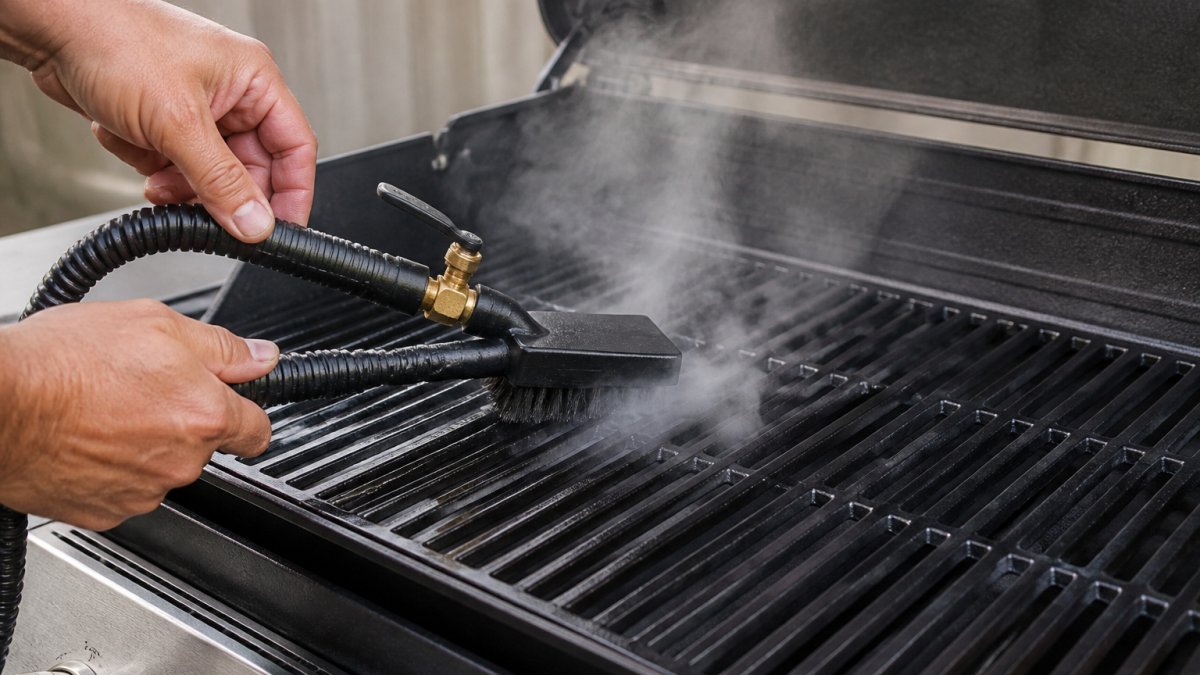
Steam is the difference between dissolving residue and scraping it. Dry brushing on porcelain applies force directly to the coating, and force causes chipping and scratches over time. Steam cleaning grill brushes work the other way: preheat the grill, fill the handle with water, open the valve, and let steam melt grease on contact. The bristles then lift what is already loose.
2. Grill Daddy Pro with Bristleless Scrubber: The Best Bristle-Free Grill Brush
If you prefer zero metal near your grates, the Grill Daddy Pro with bristleless scrubber is the safest bet for porcelain coated grates.

This is a choice, not a correction. Our stainless bristle brushes have been on grills for over 20 years with no incidents, and both formats clean well.
Best for: anyone who wants a bristle-free grill brush and a mess-free cleaning routine. Skip if: you like the feedback and reach of a wire head on stubborn corners.
3. Grill Daddy Triton 3-in-1 Wound Brush: Best Grill Scraper for Porcelain Grates
The Triton 3-in-1 wound brush is the pick when the mess lives between the bars.
Use it as a scraper first and a scrubber second. Knock off the bulk of charred residue with the edge, then work the wound heads along the grate lines.
Best for: grates with wide gaps and hard-to-reach buildup. Skip if: your grates are closely spaced and a flat pad reaches them better.
4. The Original Grill Daddy Steam Brush: Best for Small Grills
Small grills do not need a 22-inch handle or a 16-oz reservoir. The Original Grill Daddy steam brush is 14 inches long, compact enough for tailgating and small cookers, and it still runs the full steam process: preheat, fill, open the valve, scrub.

The head is removable and replaceable, the body is NSF-certified heat-resistant ABS plastic, and the 304 stainless bristles are locked in place.
Best for: small grills, tailgating setups, and oven cleaning. Skip if: you cook on a large grill and want the longer reach and bigger reservoir.
5. Grill Daddy SAFETY-CLEAN Triton 3 Row Brush: Industrial Power for Tough Grease
Some grates need force, and the SAFETY-CLEAN Triton 3 Row Brush is built for that.
The pull-test detail is worth knowing: our bristles held under a pull force of 10.4 to 24.5 lbs, a test that doubles the Bureau Veritas specification. At $19.99 with a limited lifetime warranty, it is the heavy-duty option here.
Best for: tough grease and grates that have gone a few seasons without a deep clean. Skip if: you want steam as part of the cleaning method.
The Original Grill Daddy® Steam Brush →
Are Safe Grill Brushes Really Safe? What to Look For
Safe grill brushes are tools designed to keep bristles attached to the brush rather than in your food, and the way to judge one is by its retention design plus your own inspection routine.
What most roundups skip is a compatibility check: which tool materials suit a porcelain coating, and which invite chipping.
| Tool material | Porcelain-coated grate fit | Why |
|---|---|---|
| Nylon bristles | Good for light, cool-surface cleaning | Soft enough not to scratch, but nylon softens and deforms at high heat, so it is a cool-grate tool only |
| Brass bristles | Acceptable with light pressure | Softer than steel and less likely to gouge, but brass can leave residue and still wears the coating with heavy use |
| Stainless steel bristles (locked) | Good when paired with steam and light pressure | Durable and effective; the risk is pressure, not the metal itself, so a locked head and steam-first method matter |
| Coiled or wound wire | Good for between-grate gaps | The coil keeps wire in place and reaches down into gaps a flat head cannot; use the edge as a scraper first |
| Bristle-free Aramid pad | Best for coating preservation | No wire near the surface at all; the pad scrubs with steam and eliminates the loose-bristle question entirely |
| Grill stone or pumice block | Use with caution | Abrasive by design and can dull or scratch a glossy porcelain finish if worked aggressively |
A few practical rules follow from that table.
Look for three things in any brush you buy:
- A retention mechanism. SAFE BRISTLE-LOCK and similar locking systems hold each bristle in the head rather than relying on friction alone.
- A replaceable head. A worn head is where shedding starts, so a brush you can refresh beats one you throw away.
- A documented pull test. Ask what force the bristles withstood. Ours held at 10.4 to 24.5 lbs.
Bristle retention and inspection
Check your brush before every cook. Run a gloved hand across the head, look for bent or missing wires, and retire the head at the first sign of wear. The CDC warns about injuries from wire bristles that break free during grill cleaning, which is why inspection matters more than brand loyalty. A brush with a locked head and a fresh face is safe; a frayed one is not.
A simple inspection routine takes under a minute:
- Tap the head against a hard surface to dislodge anything loose.
- Look across the bristle face at eye level for bent, splayed, or missing wires.
- Run a gloved finger along the edge of the head to feel for protruding or loose bristles.
- Replace the head at the first sign of wear, not at the end of the season.
Bristle versus bristle-free is a choice, not a safety verdict. Our stainless bristle brushes have been on grills for over 20 years with no incidents, and our bristle-free Aramid scrubber exists for cooks who simply prefer a pad. Either way, the inspection habit and compatibility check above keep a porcelain grate clean and intact.
How to Clean Porcelain Grill Grates Without Chipping the Coating
Cleaning porcelain grates without chipping comes down to heat, moisture, and light pressure, in that order.
The part most guides leave out is that hot and cool grates call for different tools and techniques. Treating every job the same is how people end up pressing too hard on a cold, greasy surface.
Cleaning a hot grate
A hot grate is the right time for steam and most brush work, because heat softens residue and lets the tool lift instead of scrape.
- Preheat the grill for 10 to 15 minutes to loosen baked-on food.
- Fill the brush with water and open the valve so steam reaches the grates.
- Scrub crosswise in light passes, letting steam do the work.
- Use a scraper edge on stubborn spots instead of pressing harder.
- Wipe down with a damp cloth and empty the water when finished.
On a hot grate, stainless bristle brushes and wound-wire heads are appropriate because the steam has already done the loosening. The rule is still light pressure: let heat and moisture break the bond, and use the bristles to carry residue away.
Cleaning a cool grate
A cool grate is the time for gentler tools and for jobs you would not do over an open flame.
Cool-grate cleaning is where people get into trouble. Scrubbing cold, congealed grease takes force, and force is what chips porcelain. If the grate is cool and the residue is stubborn, reheat the grill rather than leaning on the brush. The exception is a light maintenance wipe after a cook has cooled, which needs no pressure at all.
Two mistakes that cause most coating damage
Scrubbing a cold grate with heavy pressure is the first. The second is soaking porcelain grates in a bucket or sink, which traps moisture against the coating and around the burner area. Steam cleaning avoids both and needs no harsh chemical degreasers. For a deeper walkthrough, the USDA's food safety guidance on grill cleaning explains why residue removal matters before cooking.
Long-term cost
Long-term cost is the last thing to weigh. A $19.99 wound brush lasts seasons, while a $59.99 steam brush with replaceable heads spreads its cost across years. Both beat replacing a chipped set of porcelain grates.
Frequently Asked Questions
What is the best tool to clean porcelain-coated grill grates?
A steam-powered brush is the safest choice for porcelain coated grates because heat and water lift grease without heavy scraping. The Grill Daddy Pro combines steam with SAFE BRISTLE-LOCK technology, and its bristle-free scrubber option uses an abrasive Aramid pad. Both clean thoroughly while reducing the pressure needed on the coating. Pair either with a scraper for stuck-on residue, and avoid stiff metal scrapers that can chip the porcelain surface.
Can you use a wire brush on porcelain-coated grill grates?
You can use a wire brush, but the brush design matters more than the bristle material. Wound-wire brushes with locked bristles, like the Grill Daddy Triton, are built to stay in place and are listed as safe for porcelain grills. Avoid cheap brushes with loose bristles and skip aggressive scrubbing in one spot. Inspect any brush before each use, and replace worn heads so loose wires never end up on your food.
Are bristle-free grill brushes effective on porcelain-coated grates?
Yes. A bristle-free grill brush like the Grill Daddy Pro with Bristleless Scrubber uses an abrasive Aramid pad that works with steam to break down grease and burnt-on residue. Because there are no wires, there is nothing to shed onto the grates. The pad is dishwasher-safe and replaceable, and it resists bending, so it keeps full contact with the grate surface for an even clean.
How often should you clean porcelain-coated grill grates?
Clean the grates after every cook once they are hot, using a steam brush to lift fresh grease before it carbonizes. A deeper clean with a scraper and steam session every few weeks keeps buildup from hardening. If you grill often, check the brush head monthly and replace it when bristles or the scrubber pad show wear. Regular light cleaning is easier on the porcelain coating than occasional heavy scraping.


