

Last Updated: October 30, 2026
Quick Summary
To prevent rust on grill grates, clean them while still hot after every cook, dry them thoroughly by running the grill on high with the lid closed, then apply a thin coat of cooking oil to the warm, dry grate. Moisture control and consistent cleaning matter more than any single product.
- Brush and dry the grate after every cook, which takes 5 to 10 minutes.
- Season the grate monthly by heating it to around 350 to 400 degrees Fahrenheit for 30 to 60 minutes.
- Use about a teaspoon of high-smoke-point oil for a standard grate, then buff off the excess.
- Never cover a grill that is still warm or wet, because trapped condensation causes rust.
- For long-term storage, remove the grates, oil them, and store them indoors in a dry spot.
Table of Contents
- Why Grill Grates Rust and What Makes It Worse
- Clean After Every Cook to Prevent Rust on Grill Grates
- Dry Thoroughly and Apply a Thin Coat of Oil
- How to Season Grill Grates for a Protective Coating
- Best Oil for Grill Grates and How Much to Use
- How to Remove Rust from Grill Grates Safely
- How to Store Grill Grates and Protect Your Grill from Moisture
- Build a Simple Grill Maintenance Schedule
- Frequently Asked Questions
Why Grill Grates Rust and What Makes It Worse
Rust forms on grill grates when bare iron meets moisture and oxygen. Every cook leaves a microscopic film of grease and food behind.
Cast iron is the most vulnerable. Its surface is porous, so water soaks in and starts working on the iron from below. Stainless steel resists rust far better, but it is not immune.
Three things make rust worse:
- Skipping the post-cook clean. Grease traps moisture against the metal.
- Leaving the grill dirty overnight. Overnight is when most surface rust starts.
- Storing the grill uncovered. Rain and morning dew do the rest.
Fast, consistent cleaning and thorough drying are what stop rust, more than any single product.
Clean After Every Cook to Prevent Rust on Grill Grates
The best way to prevent rust on grill grates is to clean them while they are still hot, before grease sets.
Here is the routine we recommend:
- Finish cooking and close the lid for five minutes. The heat loosens stuck food.
- Brush the hot grate with a steam brush. Water turns to steam on contact and lifts grease.
- Scrape the stubborn spots with the built-in scraper or a wound wire brush.
- Give the grate one final pass to clear loose debris.
A steam brush does this without a bucket of soapy water. You fill it, open the valve, and scrub.
If you want a tool that makes this step quick enough to do every time, the Original Grill Daddy steam brush is designed for steam cleaning grill grates.

Dry Thoroughly and Apply a Thin Coat of Oil
Moisture is the enemy, so drying is not optional.
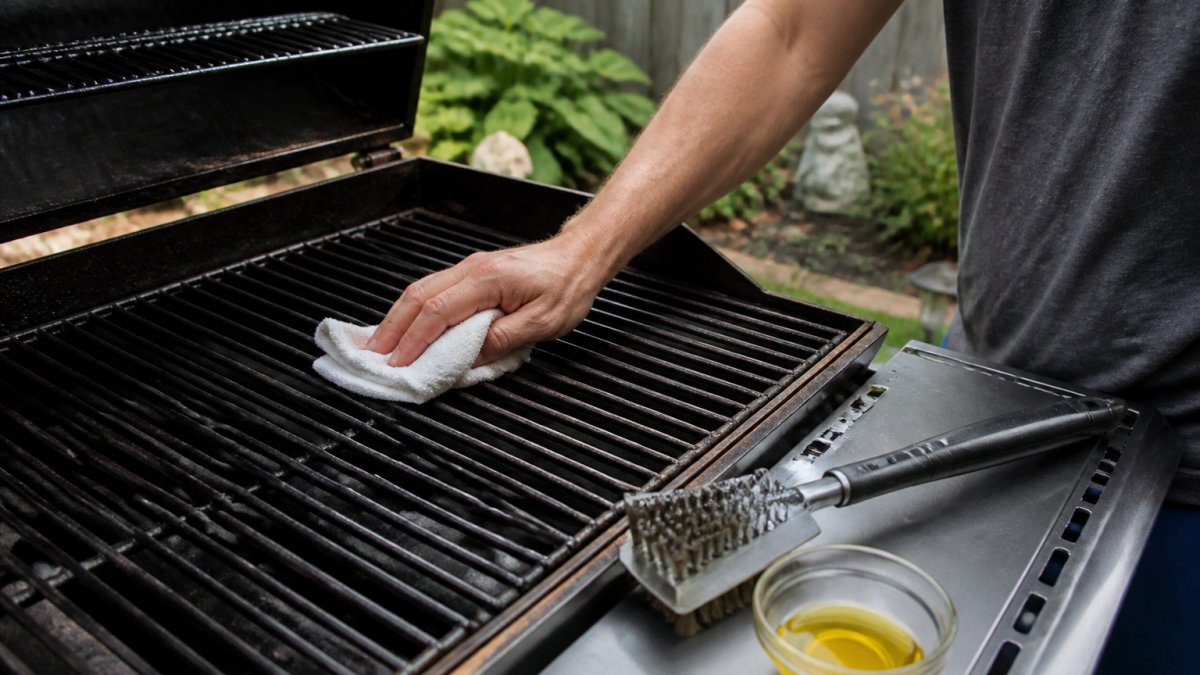
Once the grate is dry and still warm, apply a thin coat of cooking oil. Use a paper towel or a cloth.
Too much oil is a real mistake. It turns sticky, collects dust, and goes rancid between cooks.
Watch out: oiling a cold or wet grate traps water underneath the oil. Always dry and warm the grate first.
How to Season Grill Grates for a Protective Coating
Seasoning builds a hard, slick layer that keeps moisture off the metal. It works best on cast iron, but you can season steel grates too. The process is simple and takes about an hour.
- Clean the grate completely and dry it.
- Coat every surface with a thin layer of oil.
- Heat the grill to medium, around 350 to 400 degrees Fahrenheit.
- Hold that heat for 30 to 60 minutes with the lid closed.
- Let the grate cool slowly inside the closed grill.
The oil bakes onto the surface and forms a dark, protective coating. Repeat this monthly during grilling season. Cast iron owners should follow the specific steps for their grate type.
Best Oil for Grill Grates and How Much to Use
The best oil for grill grates is one with a high smoke point. It needs to handle grill heat without burning into a sticky mess. Good choices include:
- Canola oil, neutral, cheap, high smoke point
- Vegetable oil, widely available and works well
- Flaxseed oil, popular for seasoning cast iron
Olive oil works for light coating but smokes at higher heat. Save it for the food, not the grate.
The Original Grill Daddy® Steam Brush →
How much? About a teaspoon for a standard grate. Rub it in with a cloth, then buff off the extra. The grate should look slightly shiny, never wet.
How to Remove Rust from Grill Grates Safely
Surface rust is easy to fix. Deep pitting is not, and that is when you replace the grate.
- Light rust: scrub with a wire brush, then wipe with a cloth dipped in white vinegar.
- Stubborn spots: make a paste of baking soda and water, apply it, wait 15 minutes, then scrub.
- Rinse and dry completely, then re-oil the grate right away.
Anything that touches food needs care. Skip oven cleaner and industrial rust removers on cooking surfaces. Vinegar and baking soda handle most cases.
After removing rust, season the grate again to rebuild the coating. Stainless steel owners should use a gentler touch to avoid scratching the finish.
How to Store Grill Grates and Protect Your Grill from Moisture
How you store grill grates decides whether rust comes back. The rule is simple: keep them dry, keep them oiled, and keep rain off them. But the details are where most grills fail, because a cover alone can actually make rust worse.
The cover trap
A grill cover keeps rain out, but it also traps moisture in. If you cover a grill while the grates are still warm and damp from cleaning, or right after a humid evening, the water has nowhere to go. It condenses on the underside of the cover and drips back onto the grates. Many people who cover their grill faithfully still find rust every spring for exactly this reason.
The fix is sequencing, not a better cover:
- Dry first, cover second. Run the grill on high with the lid closed for five to ten minutes after cleaning, then let it cool with the lid open so residual moisture escapes.
- Cover only a fully cool, fully dry grill. Warm metal plus a tight cover equals condensation.
- Leave the vents slightly open under the cover so air can move. A little airflow beats a sealed box.
- Check under the cover monthly. Lift it, feel the grates, and look for beads of water on the lid interior. If you find moisture, the grill needs more ventilation or a drier spot.
Short-term vs. long-term storage
- Short-term (between cooks): leave the grates in the grill, coated with a thin film of oil, lid closed. This is fine for a few days in dry weather.
- Long-term (weeks or a full season): remove the grates, oil them, and store them indoors in a dry spot. A garage shelf or a closet beats a covered grill in a humid climate.
- Always: use a grill cover once the grill is fully cool and dry, and store the grill under shelter if you can. A cover under a roof lasts longer and traps less moisture than a cover in the open yard.
End-of-season care
Before winter, do a deep clean, oil the grates, dry everything thoroughly, and cover the grill. That single habit prevents most spring rust. If you store the grill in a shed or garage, skip the cover entirely and let it breathe; indoor storage with airflow is better than a sealed cover outdoors. Maintaining this same level of vigilance for your patio sets will help you prevent outdoor furniture rust throughout the dampest months of the year.
Build a Simple Grill Maintenance Schedule
Rust prevention is a habit, not a one-time job. A short schedule keeps the grate in good shape all year. Here is the one we suggest:
| Task | How Often | Time Needed |
|---|---|---|
| Brush and dry grate after cooking | Every cook | 5-10 minutes |
| Apply thin oil coat | Every cook | 2 minutes |
| Full clean and re-oil | Weekly during season | 20 minutes |
| Season the grate | Monthly | 1 hour |
| Deep clean and inspect | Start and end of season | 1-2 hours |
Inspect the grate each month for rust spots and loose bristles. For a complete maintenance routine that keeps rust from returning, see the high-end grill grate maintenance guide. Catch small spots early and they never become big ones.
Troubleshooting rust that keeps coming back
If you follow the schedule and rust still returns, the cause is usually one of four things. Work through them in order:
- Damaged coating or pitting. Porcelain-coated grates chip, and cast iron pits. Once the protective layer is broken, rust starts in that spot no matter how well you clean. Inspect for chips and pits each month; a grate with deep pitting or widespread coating loss should be replaced rather than re-seasoned.
- Inadequate drying. A grate that feels dry can still hold water in crevices, under rivets, or between bars. Run the grill on high with the lid closed for five to ten minutes after cleaning, then let it cool with the lid open.
- Humid storage. A covered grill in a humid climate traps condensation. Move the grill under shelter, crack the vents, or store the grates indoors between cooks during the wettest months.
- Oil applied to a wet or cold grate. Oil over water seals moisture in. Always dry and warm the grate before oiling.
Material-specific schedule notes
The schedule above works for all grate types, but the details differ:
- Cast iron: season monthly during the season and after any deep clean. It needs the most oil and the most attention to drying.
- Stainless steel: skip abrasive scrubbing on a routine basis; a gentle brush and a thin oil film are enough. Stainless tolerates less oil than cast iron without going sticky.
- Porcelain-coated: avoid wire brushes that can chip the coating and skip heavy seasoning. A thin oil film and thorough drying are the priority; once the coating chips, rust prevention becomes rust management.
For the cleaning step itself, steam is an effective way to loosen grease before you oil.
Frequently Asked Questions
Why do my grill grates keep rusting?
Rust comes back when moisture stays on the grates. Grease and food particles hold water against the metal, and a grill left outside in rain or high humidity never fully dries. If you skip cleaning after a cook, the residue traps moisture overnight. The fix is a routine: scrape and steam-clean after every cook, dry the grates completely, apply a thin coat of oil, and keep the grill covered or stored in a dry spot.
Is it safe to cook on a rusted grill grate?
Light surface rust spots can be cleaned off before you cook. Scrub the affected areas, rinse, and dry the grates thoroughly, then oil them lightly. If rust has eaten into the metal and left deep pitting, the grate is weakened and should be replaced. Never cook on a grate that still has loose rust or flakes on the surface, because that material can end up on your food.
Should you put oil on grill grates to prevent rust?
Yes, a thin coat of oil works as a protective coating between cooks. Apply it after the grates are clean and fully dry, using a cloth or paper towel. Vegetable oil or canola oil both work well for this. Keep the layer thin, because a heavy coat turns sticky and attracts dust. Re-oil after every cleaning session and again before you store the grill for the season.
How should I store grill grates so they do not rust?
Clean and dry the grates first, then apply a thin coat of oil. If your grates are removable, store them indoors in a dry space rather than leaving them in an uncovered grill. For a grill that stays outside, use a cover that fits properly and check it after rain, since trapped moisture under a loose cover causes rust. Empty any water from the grill body and leave vents open so air can move through.
Rust wins when cleaning gets skipped, and skipping happens when cleaning is a hassle. That is the problem we set out to solve. Grill Daddy brushes use steam to melt grease on contact, so you can clean, dry, and oil in minutes. Our brushes work on stainless steel, ceramic, and cast iron grates, and every one is backed by a lifetime warranty. Get started with Grill Daddy and keep your grates clean, dry, and rust-free all season.


