

Last Updated: November 4, 2026
Quick Summary
To remove carbon grill residue, preheat the grill for 10 to 15 minutes, then use a steam brush to loosen the buildup. Steam softens the carbon so it lifts off the grates with short, firm crosswise strokes. For light residue, a warm soapy soak or baking soda paste can loosen it without much scrubbing.
- Carbon buildup looks black and flaky, while seasoning looks thin, glossy, and dark brown.
- Preheat the grill for about 10 to 15 minutes so steam works faster.
- Brush the grates in a crosswise motion with short, firm strokes.
- Match your tool to the grate: avoid metal brushes on porcelain-coated grates.
- Before every use, inspect a bristle brush for loose or broken bristles.
Table of Contents
- How to Tell Carbon Buildup From Harmless Grill Seasoning
- What You Need Before You Start Cleaning
- How to Remove Carbon From Grill Grates Using Steam
- Best Tools for Grill Carbon Removal
- How to Clean Grill Grates Without Scrubbing
- Removing Carbon From Burners and Grease Trays
- Booking Your Next Deep Clean: Choosing the Right Brush for Your Grill
- Frequently Asked Questions
How to Tell Carbon Buildup From Harmless Grill Seasoning
Learning to remove carbon grill residue starts with knowing what you are looking at. Carbon buildup is the black, flaky crust that forms when grease and food burn onto your grates.
Seasoning is different. It is a thin, smooth, dark-brown layer that builds up on purpose as oil bonds to hot metal. Good seasoning helps food release from the grates.
Carbon buildup usually:
- Looks black, flaky, or chunky
- Breaks off in pieces when you touch it
- Sits on top of the grates instead of bonding to them
- Smells sharp or burnt when heated
Seasoning usually:
- Looks thin, glossy, and dark brown
- Stays put when you wipe it
- Feels smooth instead of crumbly
Look closely at your grates before you clean. If the buildup flakes, you need to remove it. If the surface is smooth, you may only need a light cleaning.
What You Need Before You Start Cleaning
Gather your tools first. It saves time and keeps the job simple.
- A grill brush or steam brush
- Warm water for the steam brush
- Dish soap for light residue
- Baking soda and water for a paste
- A plastic scour pad for gentle scrubbing
- A clean towel and a paper towel
Safety comes first. Turn the grill off and let it cool before you start. Hot grates cause burns, and steam can scald. Keep your hands and face back from the grill while you work.
How to Remove Carbon From Grill Grates Using Steam
Steam cleaning loosens carbon without a lot of hard scrubbing. It is one of the easiest ways to remove carbon from grill grates.
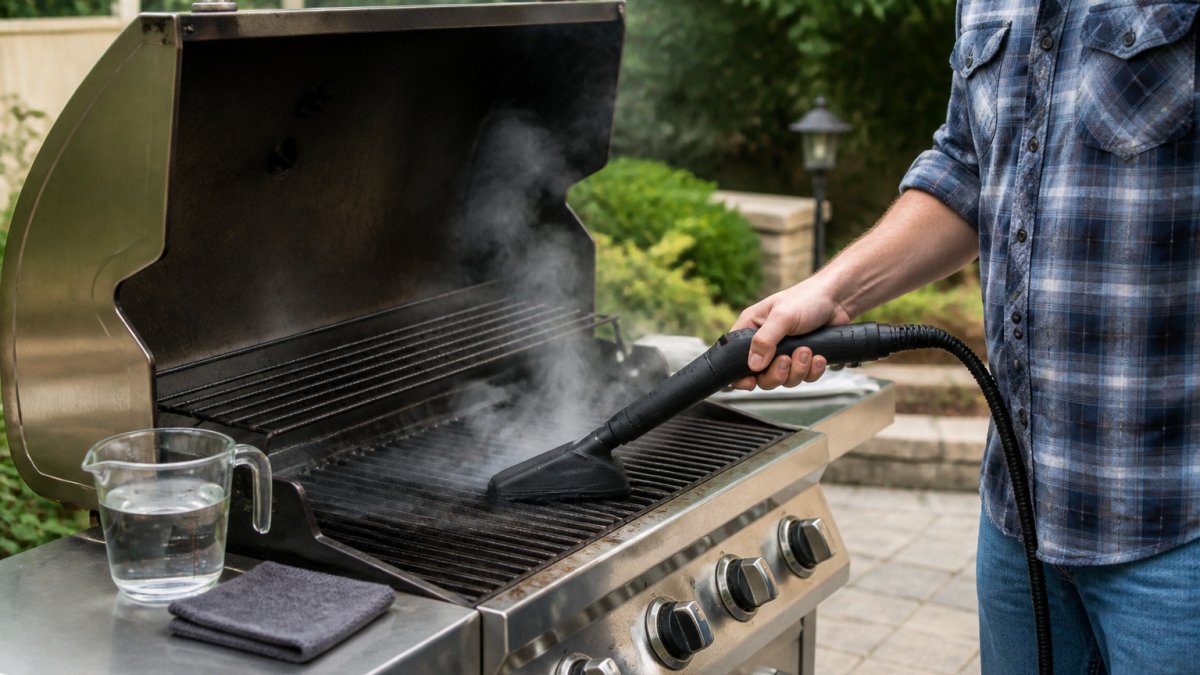
Steam works on contact. The heat and moisture soften the carbon so it lifts off the metal.
Steps for Steam Cleaning Your Grates
- Preheat the grill. Heat the grates for about 10 to 15 minutes. Warm metal helps steam work faster.
- Fill the brush with water. Keep the valve off while you fill it.
- Turn the valve on. Let steam flow onto the grates.
- Brush in a crosswise motion. Move the brush across the grates in short, firm strokes.
- Empty and dry. Pour out leftover water, leave the valve open to dry, and wipe the grates with a towel.
Best Tools for Grill Carbon Removal
Choosing the right tool depends on two things: what your grates are made of and how heavy the carbon is. Match the tool to the grate before you start.
Match the Tool to Your Grate Material
- Stainless steel grates: Stainless steel bristle brushes and steam brushes are suited to this surface.
- Porcelain-coated grates: Use a plastic scour pad or gentle scrubbing rather than metal tools.
- Cast-iron grates: Cast iron holds seasoning, so aggressive scraping can strip the protective layer.
Tool Comparison
| Tool | Best For | Grate Compatibility | Trade-offs |
|---|---|---|---|
| Steam brush | Regular upkeep, loosening light to medium carbon | Stainless steel, porcelain, cast iron | Needs a water fill and a hot grill; less aggressive on heavy crust |
| Stainless steel bristle brush | Stubborn buildup, reaching between grates | Stainless steel, cast iron | Can scratch porcelain; inspect for loose bristles before each use |
| Bristle-free scrubber | Coated grates, shoppers who prefer no bristles | Porcelain, enameled cast iron, stainless steel | Less reach into tight gaps than a bristle brush |
| Plastic scour pad | Light residue, delicate coatings | Porcelain, enameled cast iron | Wears out faster; not for heavy carbon |
| Grill scraper | Flat carbon on stainless steel | Stainless steel | Can gouge porcelain and cast iron |
Grill Daddy Brush Company offers both bristle and bristle-free options. Our steam brushes, including the original Grill Daddy® Steam Brush, are suited to regular upkeep. For larger grills, the Grill Daddy® Pro - Authentic Steam Grill Brush is an option.


For tougher jobs, the Grill Daddy Triton 3-in-1 Wound Brush and the Grill-Force Triton 3 Row Brush give you heavy-duty bristle options. If you want to skip bristles entirely, read our bristle-free grill brush buyer's guide before you decide.
The Original Grill Daddy® Steam Brush →

Bristle brushes and bristle-free scrubbers are both options. Choose based on your comfort and how you cook.
Watch out: Before every use, inspect a bristle brush for loose or broken bristles.
How to Clean Grill Grates Without Scrubbing
You can loosen carbon without much scrubbing. Try these soaking methods first:
- Warm soapy soak: Fill a tub with hot water and dish soap. Soak the grates for 20 to 30 minutes, then wipe.
- Baking soda paste: Mix baking soda with water into a thick paste. Spread it on the grates, let it sit for 15 minutes, and wipe with a damp cloth.
- Plastic wrap method: Soak a paper towel in soapy water, wrap the grates in it, cover with plastic wrap, and let them sit for an hour.
These methods work best on light residue. For heavy buildup, combine a soak with steam cleaning.
Watch out: Avoid harsh oven cleaners on your grates unless the label says it is safe for grill grates. Rinse thoroughly and dry completely afterward.
Removing Carbon From Burners and Grease Trays
Carbon collects on burners and grease trays too, and the symptoms can look like dirty grates. Before you scrub, figure out which part is actually causing the problem. Uneven heat, weak flames, or flare-ups that persist after you clean the grates usually point to the burners or the air and gas path, not the cooking surface.
Tell Grate Carbon From Burner Trouble
- Carbon on the grates: Flaky black crust on the bars, smoke at startup, and food sticking. Cleaning the grates fixes it.
- Blocked burner ports: Uneven flames, cold spots, or burners that light slowly. The ports are clogged with carbon or grease.
- Airflow or gas supply problem: Weak yellow flames across all burners, a smell of gas, or burners that will not stay lit. Stop and check the gas supply and venturi tubes before cooking again.
If cleaning the grates does not fix uneven heat, move to the burners.
Clean the Burners Safely
- Turn the gas off and disconnect the propane tank. Never clean burners with the gas on.
- Remove the grates and heat plates so you can reach the burner tubes.
- Clear each port. Use a thin wire, a pin, or a dedicated burner brush to push carbon out of the holes gently. Do not enlarge the ports.
- Check the venturi tubes. Spiders and grease can block the air intake. Run a bottle brush through the tubes if your manual allows it.
- Wipe the burner surfaces with a damp cloth and let them dry fully before reassembly.
Clean the Grease Tray
- Slide out the tray and scrape the cooled grease into the trash, not the sink.
- Wash the tray with warm soapy water and a plastic scour pad.
- Rinse and dry completely to prevent rust.
- Line the tray with foil if your manual permits it, which makes the next cleanup faster.
Clean burners and grease trays every few cooks, or whenever you notice uneven heating or a grease smell. A clear burner port and an empty tray are the two easiest ways to prevent flare-ups before they start.
Booking Your Next Deep Clean: Choosing the Right Brush for Your Grill
Plan your next deep clean around your grill type and how often you cook.
For regular upkeep, the original Grill Daddy® Steam Brush is a simple choice. For a heavier deep clean, the Grill Daddy Triton 3-in-1 Wound Brush and the Grill-Force Triton 3 Row Brush are bristle options.
Shoppers who want no loose bristles should compare options first in our bristle-free grill brush buyer's guide. Whatever you choose, Grill Daddy Brush Company is here to help you keep your grill clean and ready for the next cookout.
Frequently Asked Questions
How do I remove carbon buildup from my grill?
Turn the grill off and let it cool slightly, then remove the grates. Heat the grates again and use a steam grill brush, such as the Grill Daddy Pro at $59.99, to loosen carbon with water vapor. Brush in a crosswise motion, rinse, and dry the grates before replacing them. For stubborn spots, soak the grates in warm soapy water for 20 to 30 minutes and scrub with a plastic scour pad to avoid damaging the surface.
Is it safe to use wire brushes on grill grates?
Wire brushes can work, but loose bristles can break off and stick to grates, and small pieces can end up in food. Inspect any brush before each use and replace it when bristles bend or shed. Bristle-locked steam brushes and bristle-free scrubbers are both options for routine cleaning.
How often should I deep clean my grill to prevent carbon buildup?
Brush the grates after each cooking session while they are still warm, which keeps light residue from hardening. A deeper clean, including the grease tray and burner area, is worth doing every few months or whenever you notice heavy buildup, flare-ups, or uneven heating. Frequent grillers may need a deep clean more often than occasional users.
Can steam cleaning remove baked-on carbon?
Steam loosens softened grease and light carbon well, especially when grates are heated first. Very thick, baked-on carbon may need several passes, a short soak, or gentle scraping with a plastic scraper. Steam works best as a regular maintenance step, so repeated cleaning keeps buildup from becoming hard to remove.


