

Last Updated: November 5, 2026
Quick Summary
To clean barbecue grates safely, use heat, water, and steam instead of force: a steam brush melts grease on contact, while baking soda paste or a short vinegar soak loosens residue for a light scrub with a bristle-free pad. Match the method to the grate material, rinse thoroughly, and dry fully to prevent rust.
- Make a thick baking soda and water paste, coat cool grates for 15 to 30 minutes, then scrub with a nylon pad.
- Soak removable grates in equal parts white vinegar and water for 30 minutes to an hour, then rinse and dry right away.
- Never leave cast iron soaking in water overnight, since it will rust; use the paste method instead.
- Inspect your brush before every use for loose bristles, a wobbling head, or gaps, and replace worn heads.
- After every cook, do a quick steam pass while the grill is still hot.
Table of Contents
- Why Grill Grate Cleaning Needs a Safety-First Approach
- Safe Ways to Clean Barbecue Grates With Baking Soda
- Safe Ways to Clean Barbecue Grates With Vinegar
- How to Clean Grill Grates Without Scrubbing
- How to Clean Grill Grates Overnight
- Matching Your Cleaning Method to Grate Material and Soil Level
- Preventing Rust and Picking the Right Grill Brush
- Building a Cleaning Routine That Fits Your Grill
- Frequently Asked Questions
Why Grill Grate Cleaning Needs a Safety-First Approach
Safe ways to clean barbecue grates start with one question: what are you scraping off, and what are you scraping with? At Grill Daddy Brush Company, we have spent nearly two decades building tools around a simple idea. Heat, water, and steam do the work, not force.
Here is the part most guides skip. A grill brush is only as safe as the way it holds its parts together. That is why we build both bristle brushes with SAFE BRISTLE-LOCK technology and bristle-free Aramid scrubbers. Two options, one goal: a clean grate you feel good cooking on.
The USDA Food Safety and Inspection Service guide to safe grilling is clear that a clean cooking surface is part of safe outdoor cooking, not a separate chore.
Safe Ways to Clean Barbecue Grates With Baking Soda
Baking soda is the gentlest deep cleaner in your kitchen, and it works on grill grates too. It lifts grease and loosens carbonized residue without harsh fumes.
Here is one way to do it:
- Make a thick paste with baking soda and water.
- Coat the cool grates and let it sit for 15 to 30 minutes.
- Scrub with a nylon pad or a bristle-free scrubber.
- Rinse with hot water and dry fully.
Watch out: baking soda paste left on cast iron too long can strip seasoning. Keep the soak short and re-oil the grates after drying.
For a full walkthrough of no-scrub carbon removal, read how to remove carbon from a grill without scrubbing.
Safe Ways to Clean Barbecue Grates With Vinegar
White vinegar cuts through light grease and hard water film, and it pairs well with baking soda. The fizzing action helps lift stuck-on food from the surface.
A vinegar soak works like this:
- Mix equal parts white vinegar and water in a shallow tray.
- Soak removable grates for 30 minutes to an hour.
- Scrub lightly with a bristle-free scraper.
- Rinse and dry right away to prevent rust.
Vinegar is acidic, so keep it off porcelain-coated grates for long stretches. Short soaks are fine. Overnight soaks are not.
How to Clean Grill Grates Without Scrubbing
The best no-scrub method is steam. A steam grill brush turns water into a cleaning force that melts grease on contact, so you are not fighting baked-on grime with elbow grease.
The steam process is simple:
- Preheat the grill with the lid closed.
- Fill the brush reservoir with water, valve off.
- Turn the valve on and brush the hot grates.
- Let the steam lift the residue, then wipe with the brush head.
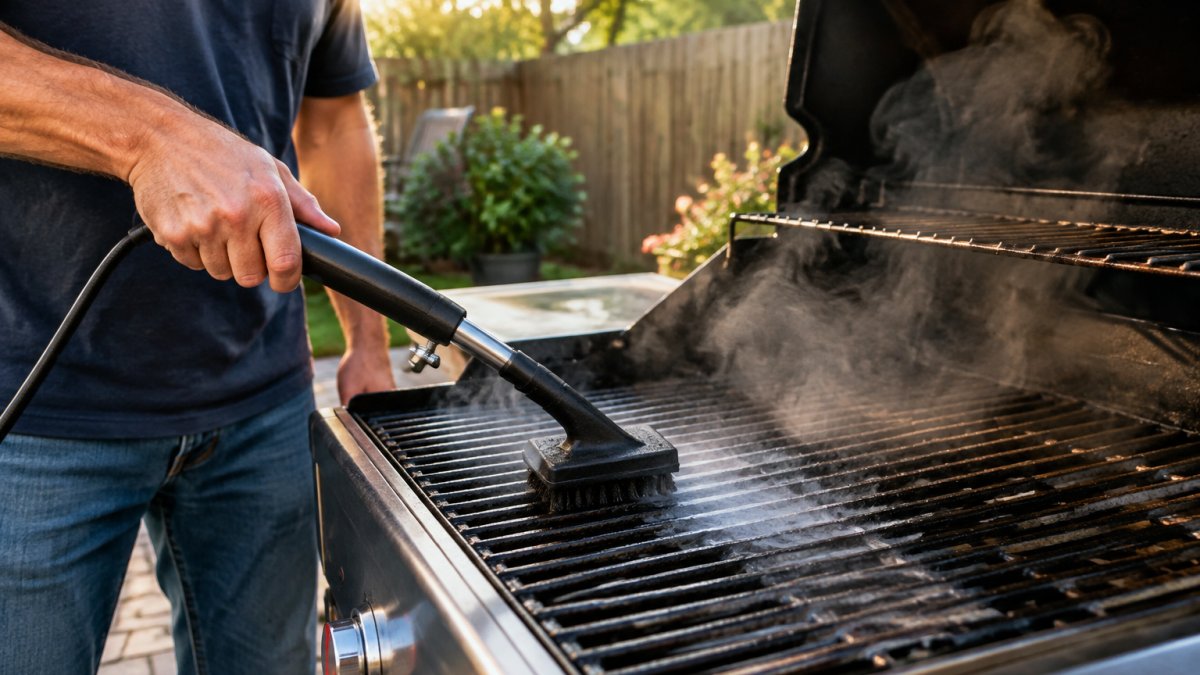
No bucket, no mess. The Original Grill Daddy® Steam Brush ($29.99) is built for smaller grills and even oven racks.
If you want more wire-free methods, see our roundup of ways to clean grill grates without wire brushes.
How to Clean Grill Grates Overnight
Overnight cleaning is for stubborn grime you would rather not scrub. The trick is a slow, gentle soak that does the work while you sleep.
A simple routine:
- Lay removable grates in a large tray or trash bag.
- Add a paste of baking soda and water, or a vinegar and water mix.
- Seal and leave overnight.
- Rinse, scrub lightly, and dry completely in the morning.
Watch out: never leave cast iron soaking in water overnight. It will rust. Use the paste method instead and wipe it off, rather than soaking.
Matching Your Cleaning Method to Grate Material and Soil Level
Not every grate wants the same treatment. The wrong tool or cleaner can scratch a coating, strip seasoning, or leave a residue that ends up on your food. Match the method to the metal and the mess, and your grates last longer and stay safer to cook on.
Stainless steel grates
Stainless steel is generally a forgiving surface. A steam brush is the fastest safe option because heat and water lift grease without abrasion. For deeper carbon, a baking soda paste left on for 15 to 30 minutes loosens residue so you can wipe it away.
The Original Grill Daddy® Steam Brush →
Watch out: abrasive pads and metal scrapers can leave scratch marks that trap grease and make future cleaning harder. Stick with nylon pads, bristle-free scrubbers, or a steam brush head.
Cast iron grates
Cast iron holds a seasoning layer that helps protect it from rust. That seasoning is the thing to protect. Hot water and a stiff brush are enough for most cooks. Re-oil the grates with a thin coat of cooking oil while they are still warm to maintain the seasoning.
Watch out: long water soaks and dish soap can strip seasoning. Never leave cast iron soaking overnight. If you use a baking soda paste, keep it short and re-oil after drying.
Porcelain-coated grates
Porcelain enamel can chip if struck with metal. Soft scrubbers are a gentler choice. Baking soda paste is fine for light soil, but keep vinegar contact brief because acid can dull the coating over time.
Watch out: metal scrapers and wire brushes can chip porcelain, and chipped spots expose the metal underneath to rust. Inspect coated grates for chips before each deep clean.
Matching method to soil level
Soil level matters as much as material. Use this guide:
- Light grease after a cook: a quick steam pass while the grates are still hot. Heat and water do the work, no scrubbing force needed.
- Moderate buildup: a baking soda paste for 15 to 30 minutes, then a bristle-free scrubber.
- Heavy carbonized residue: start with a scraper to break the top layer, then steam to lift what remains. Save vinegar soaks for removable grates that can be rinsed and dried completely.
Food-contact safety after cleaning
Whatever method you use, residue matters. Rinse grates thoroughly with hot water after any paste or soak, and wipe them dry before cooking. Avoid leaving cleaner residue in the crevices where food sits. Grates are safe to use again once they are fully dry and free of visible cleaner film. For cast iron, the re-oiling step doubles as a safety check: a thin, even coat means the surface is clean and protected.
Match the method to the metal and the mess with this quick reference.
| Grate material | Safe method | Watch out for |
|---|---|---|
| Stainless steel | Steam brush; baking soda paste 15 to 30 minutes | Abrasive pads and metal scrapers scratch |
| Cast iron | Hot water and stiff brush; re-oil while warm | Long soaks and dish soap strip seasoning |
| Porcelain-coated | Soft scrubbers; brief baking soda paste | Metal scrapers and wire brushes chip coating |
| Light grease | Quick steam pass while grates hot | No scrubbing force needed |
| Moderate buildup | Baking soda paste 15 to 30 minutes | Follow with bristle-free scrubber |
| Heavy carbonized residue | Scraper first, then steam | Save vinegar soaks for removable grates |
Preventing Rust and Picking the Right Grill Brush
Rust starts with moisture left behind. Dry your grates fully after every clean, and give cast iron a thin coat of oil while it is still warm. For light rust, scrub with a bristle-free scrubber and a baking soda paste, rinse, dry completely, and re-oil. For heavier rust, a short vinegar soak on removable grates can help, but rinse and dry right away so the acid does not eat into the metal. Proper storage matters too: keep grates dry and covered between cooks, and avoid leaving them outside in damp conditions.
Wire-brush safety and inspection
Inspect your brush before every use, since loose bristles can transfer to food. Look for bristles that pull free, a head that wobbles, or gaps where bristles meet the block. If you find any, replace the brush or the head. Retire a brush head when it shows wear.
Watch out: a worn head cleans poorly and is harder to trust. If you are unsure about a brush, switch to a bristle-free scrubber until you replace it.
Bristle vs bristle-free: a choice, not a safety issue
Both bristle brushes and bristle-free scrubbers are safe and effective when used and maintained properly. The choice comes down to preference and cooking style. Bristle brushes use stainless steel bristles, and bristle-free scrubbers use a coarse Aramid fiber pad. Both are safe and effective when used and maintained properly. The key is inspecting and replacing worn tools.
What to check when shopping
- How the bristles are locked in place
- Whether the head is replaceable
- Whether the handle keeps your hand away from the heat
The bristle-free Aramid scrubber is an option if you prefer no bristles at all. For a curated list of safe tools, see our guide to the best tools for cleaning barbecue grates. And if you want the full story on wire brush risks, read why wire brushes are dangerous.
Building a Cleaning Routine That Fits Your Grill
A regular routine helps keep grates clean. Here is one possible schedule:
- After every cook: a quick steam pass while the grill is hot.
- Weekly: a full brush-down and grate check.
- Monthly: a baking soda or vinegar soak for deep cleaning.
- Every 4 to 6 months: inspect and replace worn brush heads.
Replace worn brush heads as needed. Products listed in the catalog recommend periodic replacement, especially for frequent grilling.
Want to build a kit that fits your grill? Shop all Grill Daddy products to find the right brush, scrubber, and replacement heads.
Frequently Asked Questions
What is the safest way to clean grill grates?
Steam cleaning is one effective approach for many grates. Preheat the grill, fill a steam brush with water, open the valve, and scrub the hot grates. The steam melts grease and lifts carbonized residue without harsh chemicals. For heavier buildup, pair steam with a baking soda paste on cool grates, then rinse and dry fully. Avoid wire brushes that can shed loose bristles into food, and always match your method to the grate material so you do not damage porcelain coatings or strip cast iron seasoning.
Can you clean grill grates with vinegar and baking soda?
Yes. These are two of the safe ways to clean barbecue grates with common pantry items. Make a baking soda paste with water, apply it to cool grates, and let it sit for 20 to 30 minutes before scrubbing and rinsing. For vinegar, soak grates in a white vinegar and water solution or spray them down and let the acid loosen grease. Use them separately rather than mixing, rinse thoroughly, and dry the grates right away to prevent rust.
How do you clean grill grates without scrubbing?
Heat and time do most of the work. After cooking, close the lid and let the grill run hot for 10 to 15 minutes so leftover food carbonizes and releases. For overnight cleaning, apply a baking soda paste or a vinegar soak before bed, then rinse in the morning. A steam brush can also reduce scrubbing, since steam helps lift grease from the grates.
Is it safe to grill on rusted grates?
Light surface rust is common on cast iron and can be scrubbed off, then the grates reseasoned with oil and heat. Heavy rust that pits the metal or flakes onto food is a different story: replace those grates. For stainless steel and porcelain-coated grates, remove rust promptly with a baking soda paste and dry thoroughly, since moisture left on grates between cooks is the main cause of corrosion. Keeping grates dry and oiled after every clean prevents most rust from starting.
Your grill deserves a cleaning routine that is fast, safe, and chemical-free. Grill Daddy Brush Company makes it easy with steam-powered brushes, SAFE BRISTLE-LOCK technology, bristle-free Aramid scrubber options, and a lifetime warranty. Get started with Grill Daddy and keep every cookout clean, safe, and simple.


